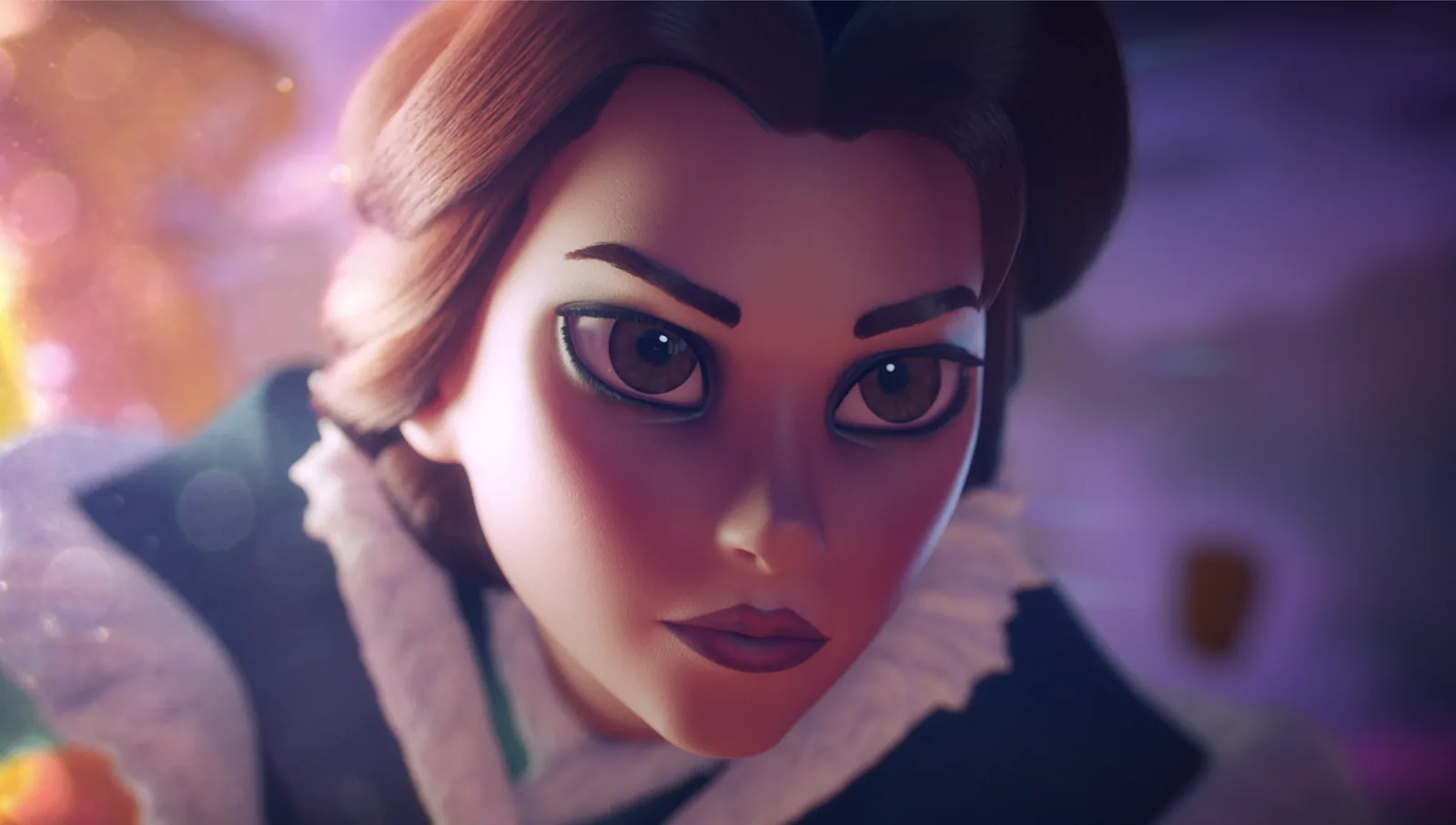
In 2018 I returned to mobile games and joined Kabam in Vancouver, BC, as Lead UX/UI Designer on their brand new partnership with Disney: an ARPG mobile title to re-imagine the Disney universe.
I took over the UXUI team and joined a game team struggling to meet tight deadlines on its way toward worldwide launch. My responsibilities included managing and prioritizing the team, and managing cross-team and partner relationships and approvals.
Rocky start and revolving leadership
I was the third UXUI Lead on the Mirrorverse project, and before the end of our Beta the team went through three reskins of the UI as the game team made more than three attempts to launch. As the project continued, the direction shifted as we came to understand our game and our place in the market.
We started by redefining the UI styleguide and the core loop. Like the reskin, the core loop and RPG experience were being redesigned around a completely new type of gameplay, based on the company's previous tech in Marvel Contest of Champions and Transformers: Forged to Fight. Alongside game designers, we re-established the core pillars of the game's UX and delivered documentation and wireframes for the entire core loop within my first three months.
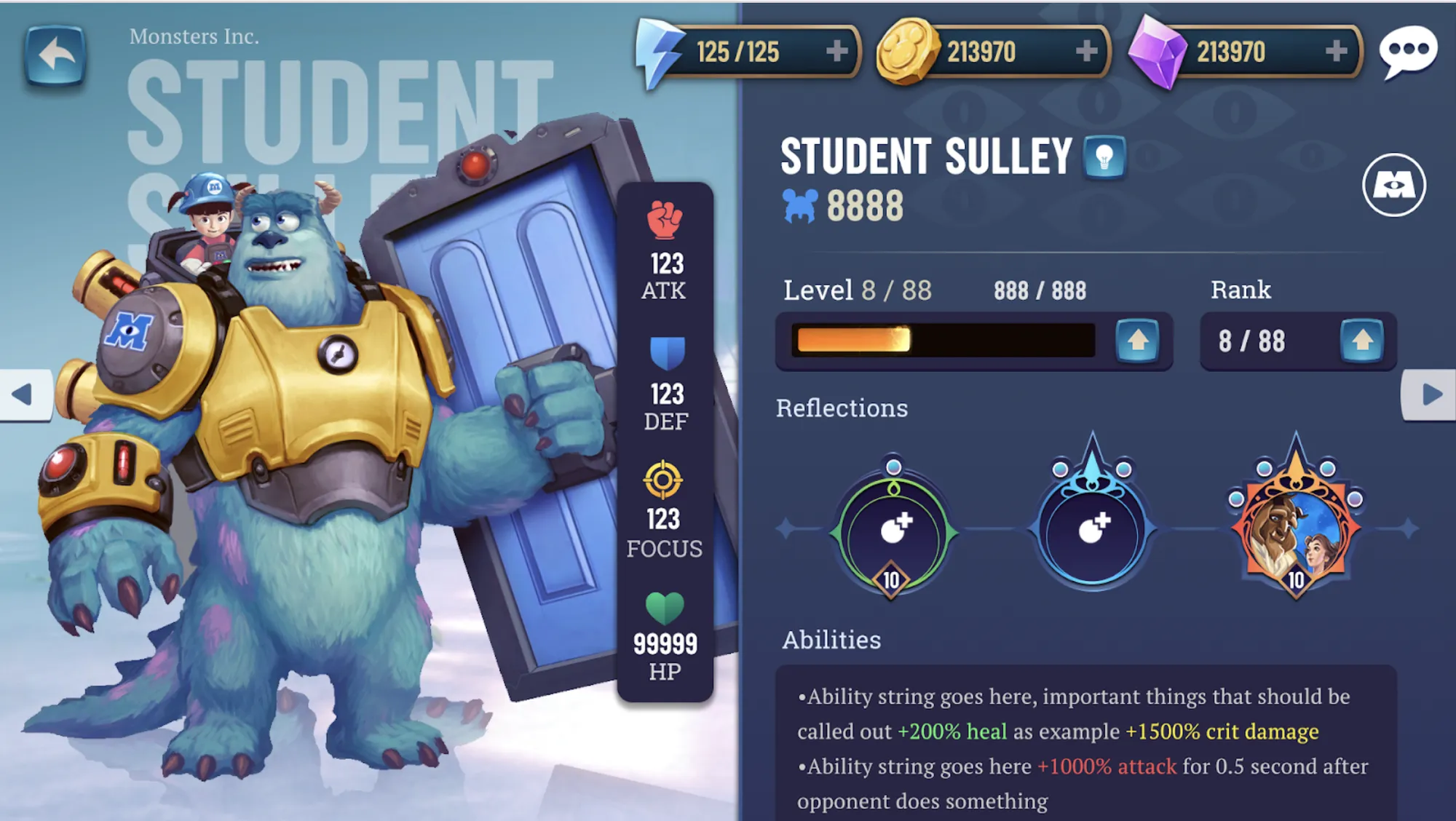
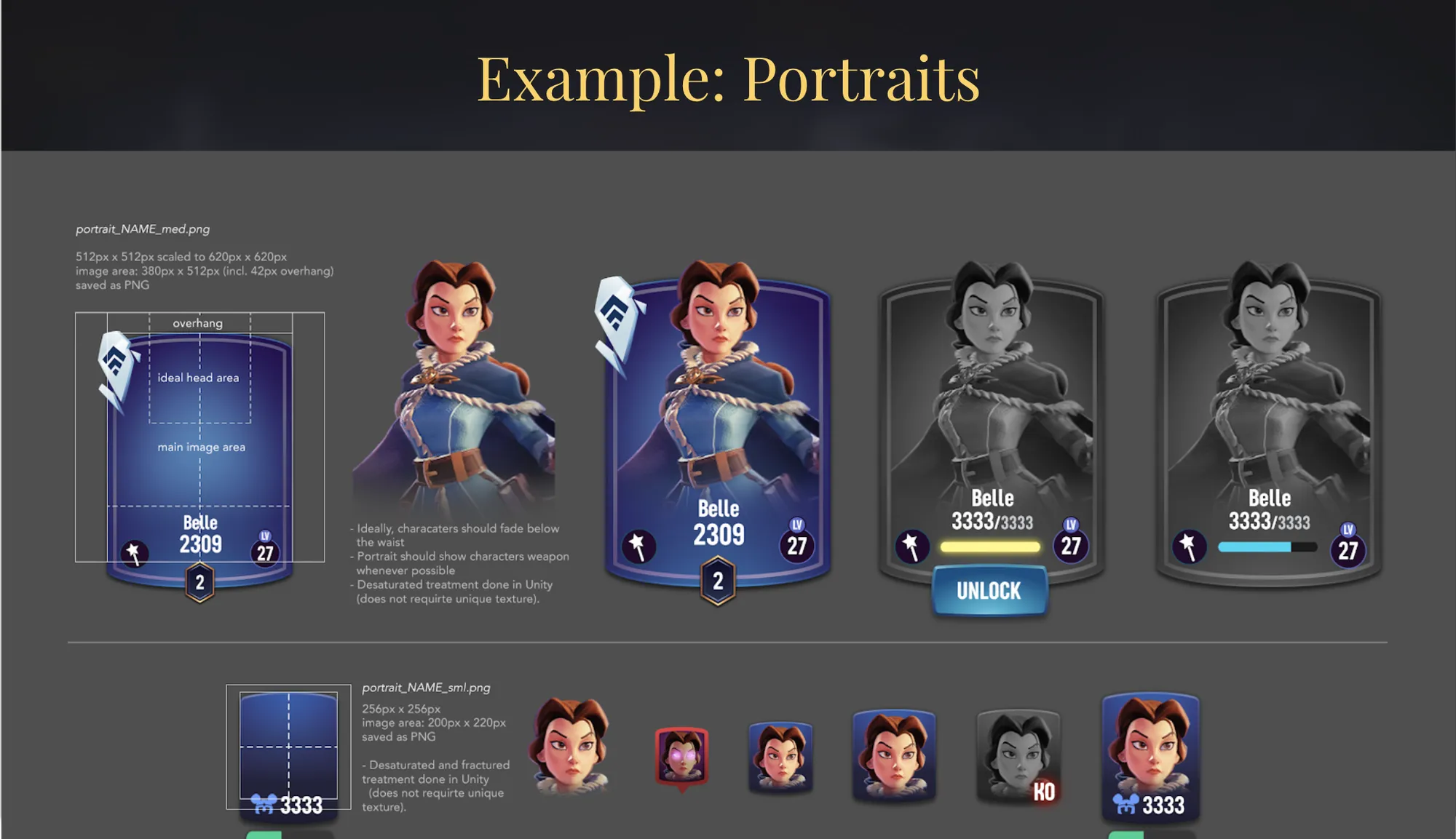
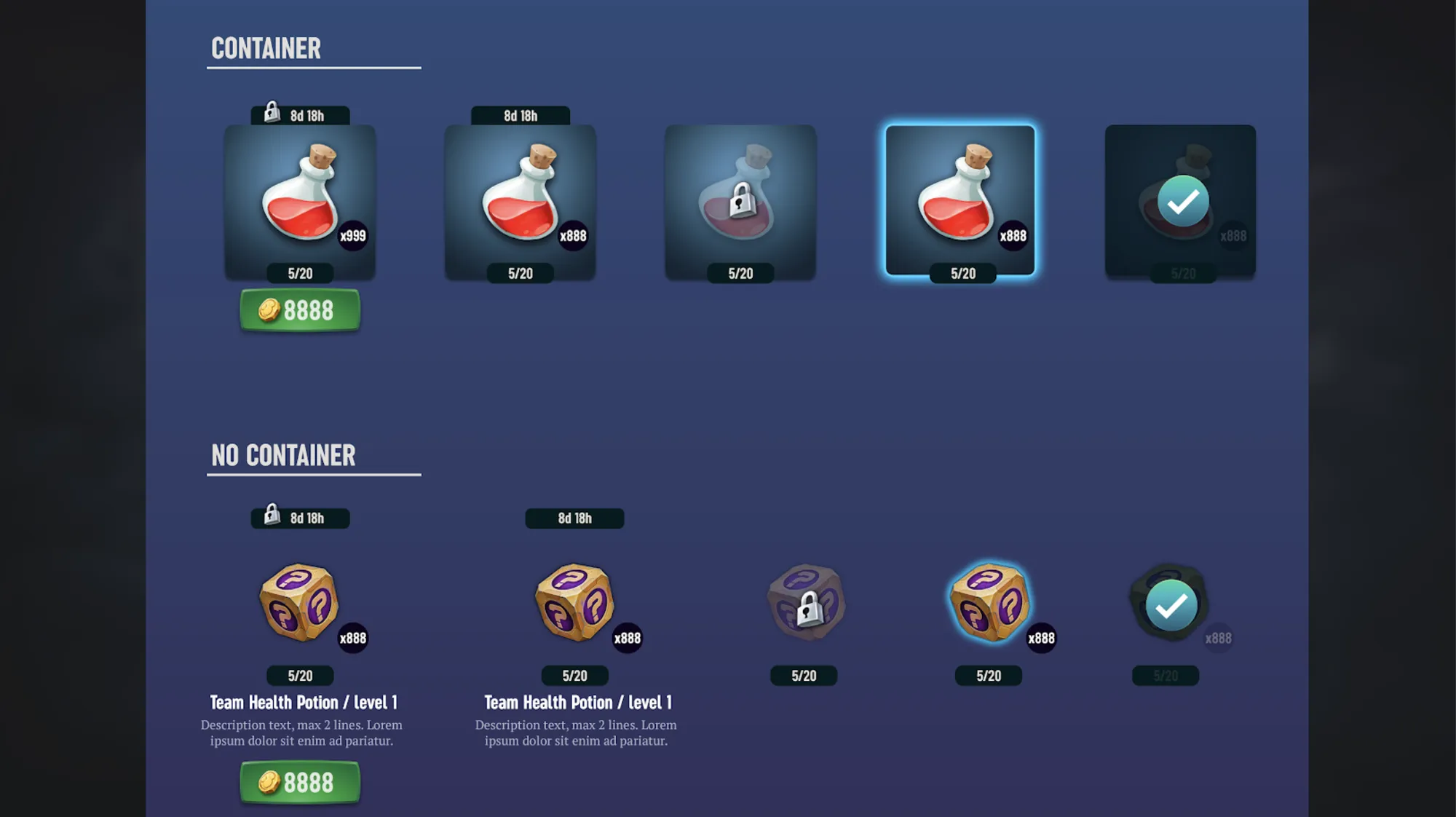
Styleguide V2, 2019. "Blue Light." UX: Kevin Deng, Ellie Moon, Jonathan Donegan, Dongjun Kim. UI Art: Scott Lindsay, Jennifer Duong.
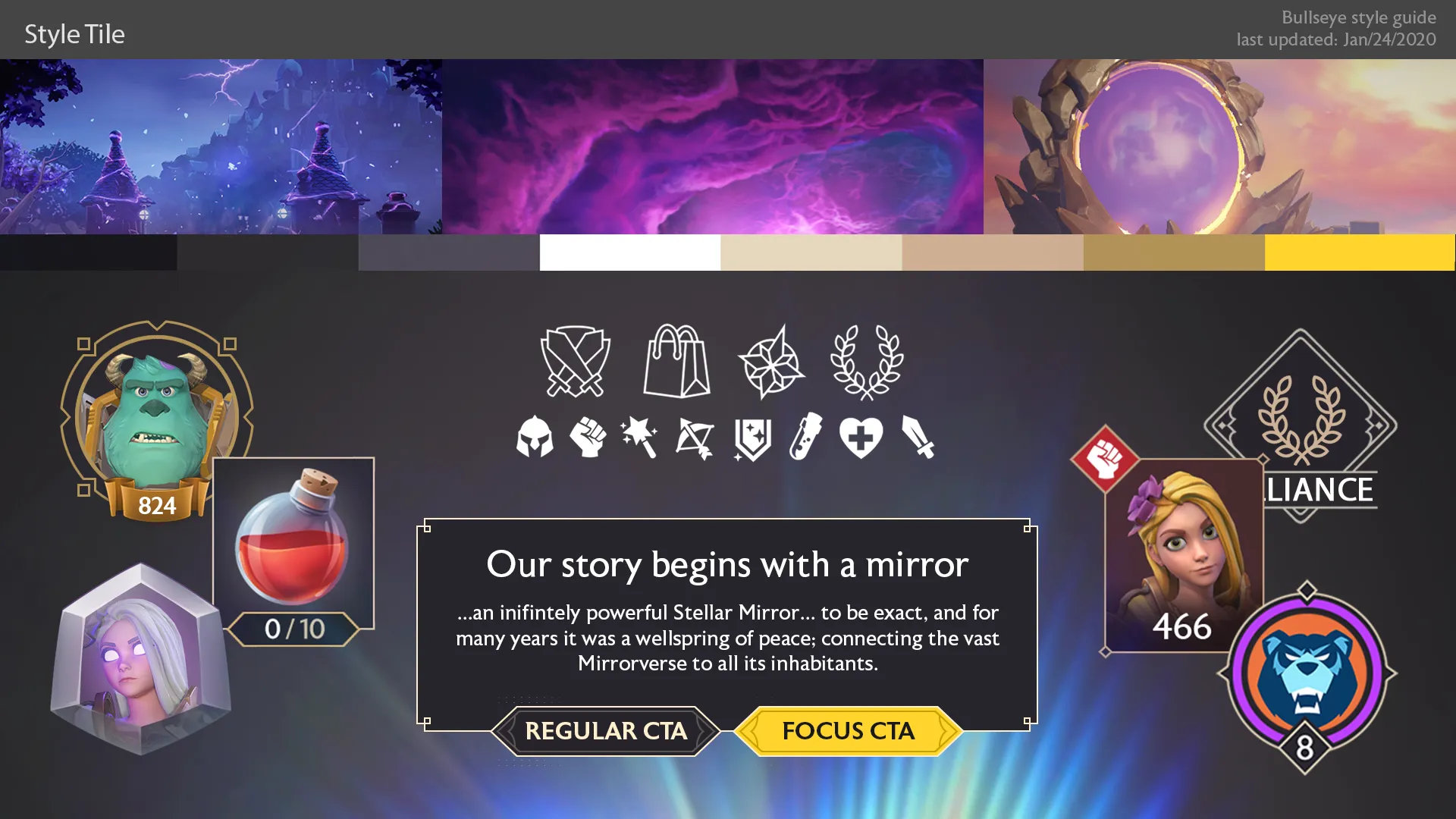
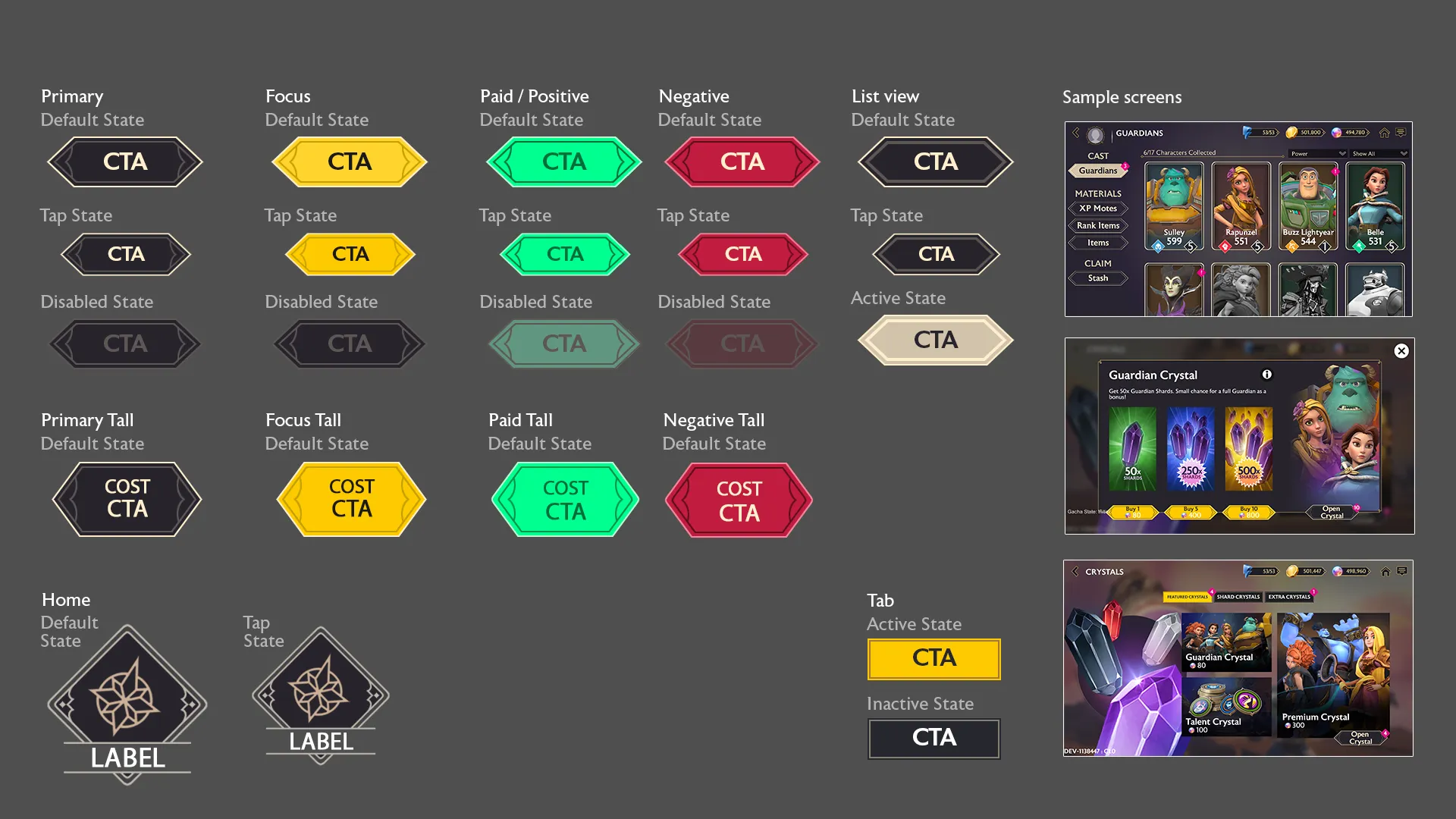
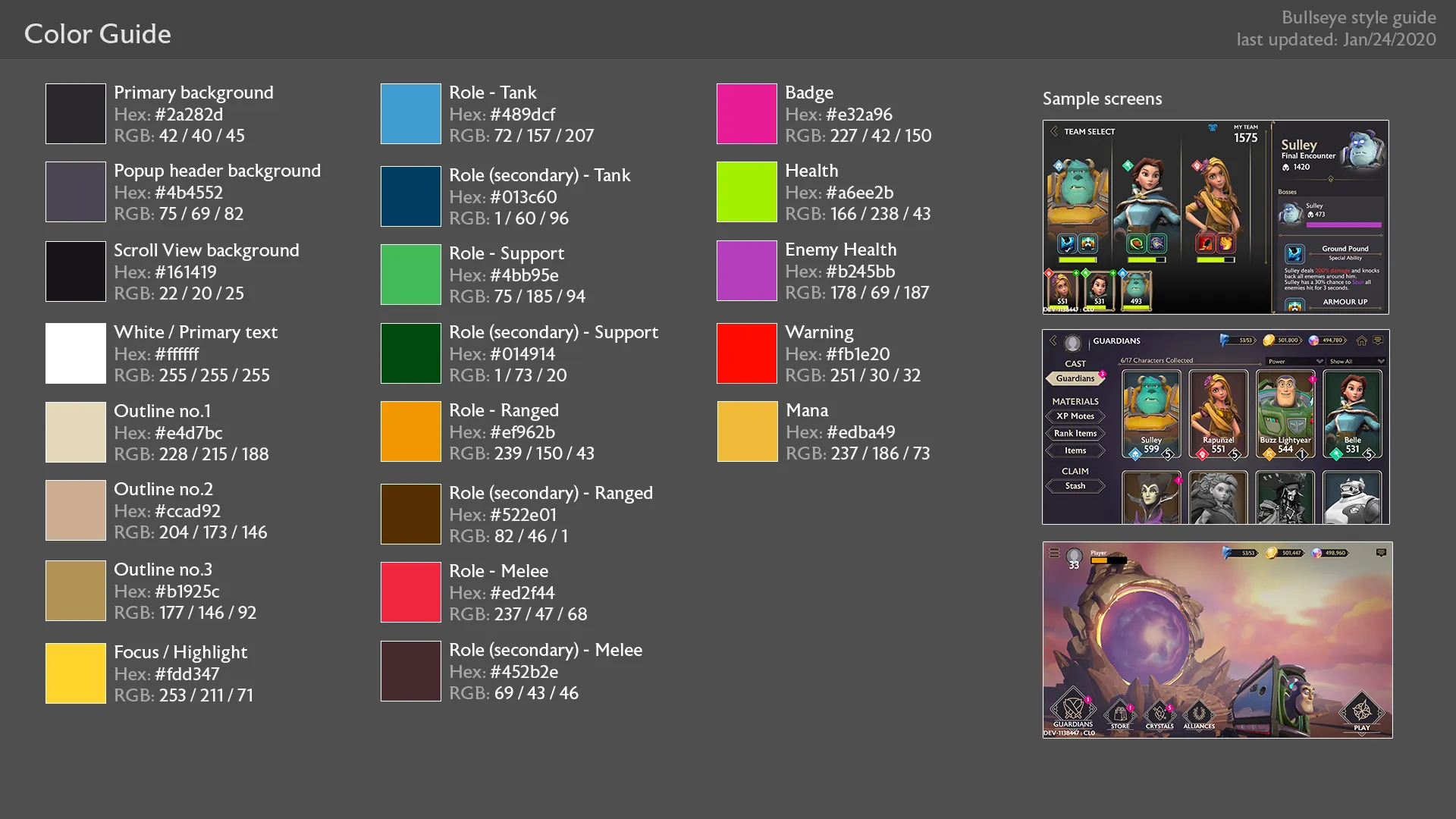
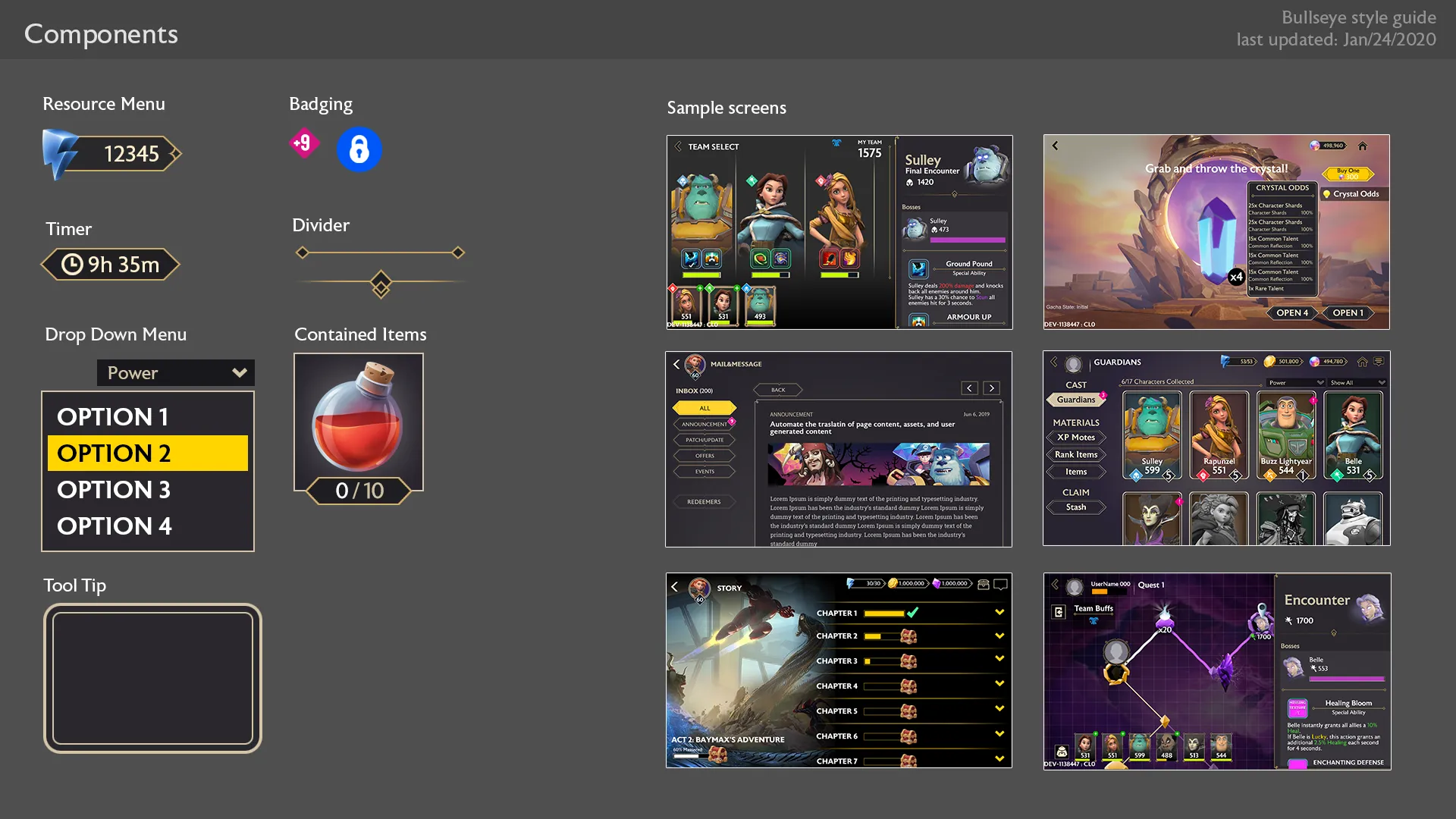
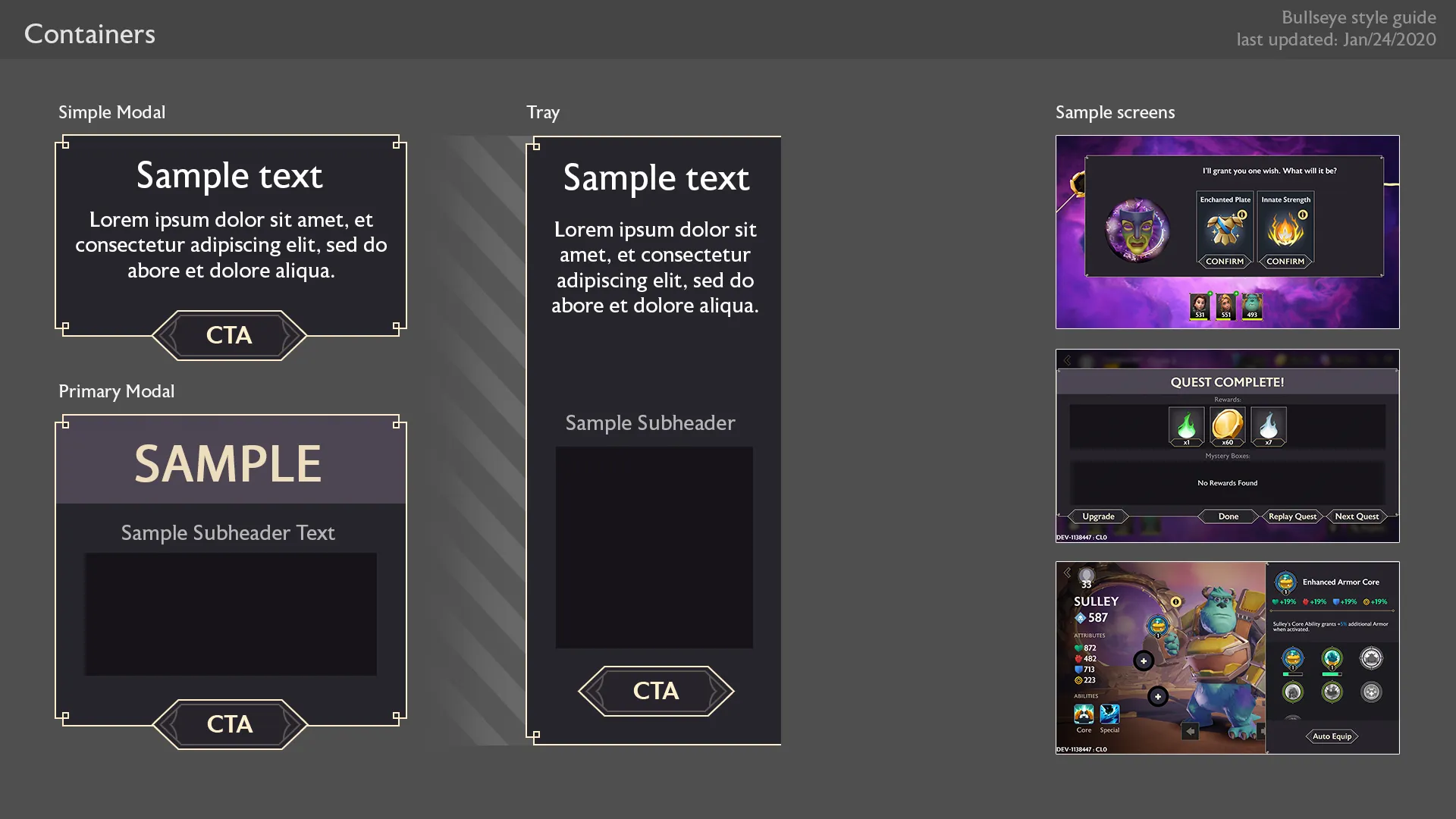
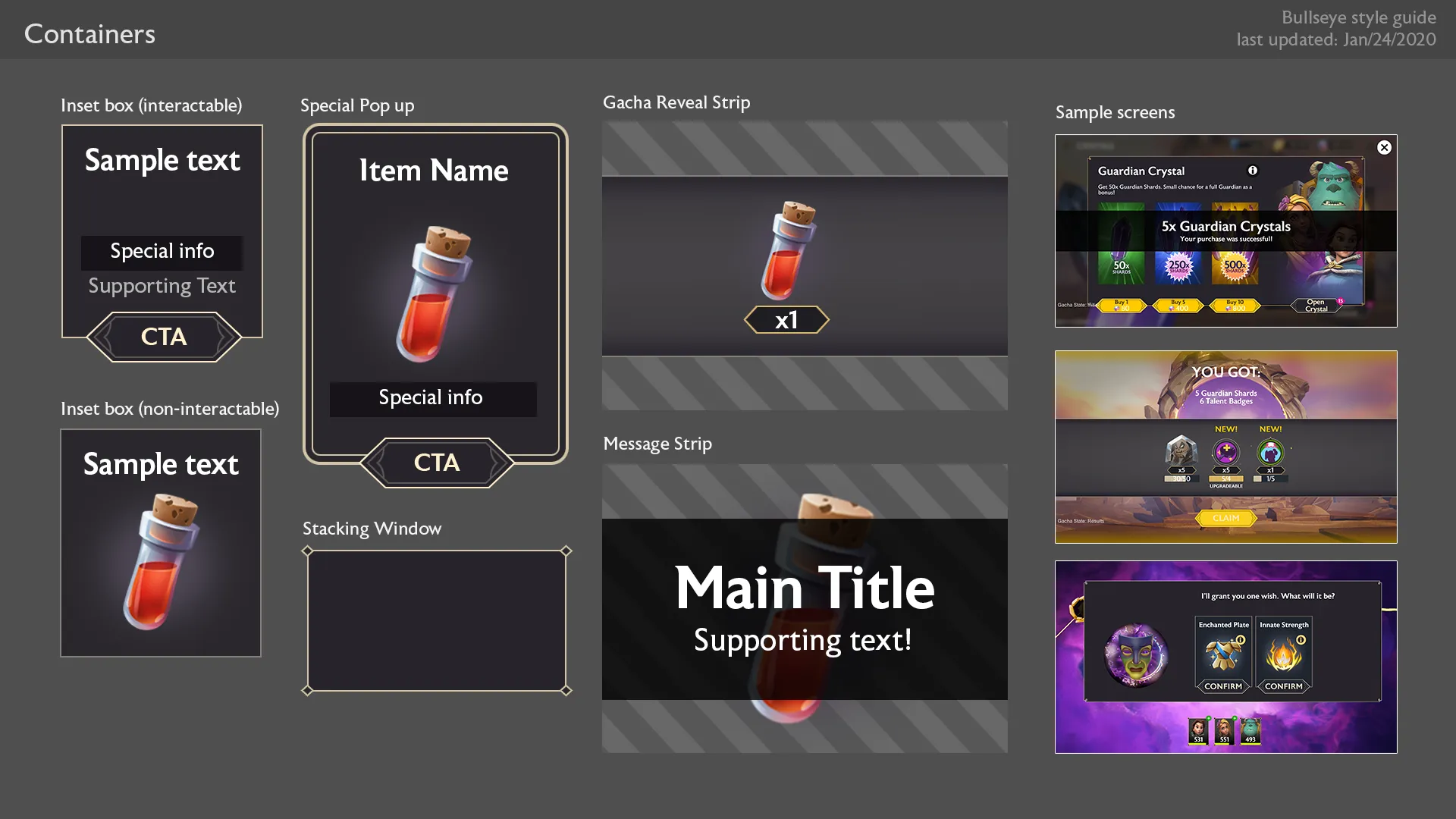
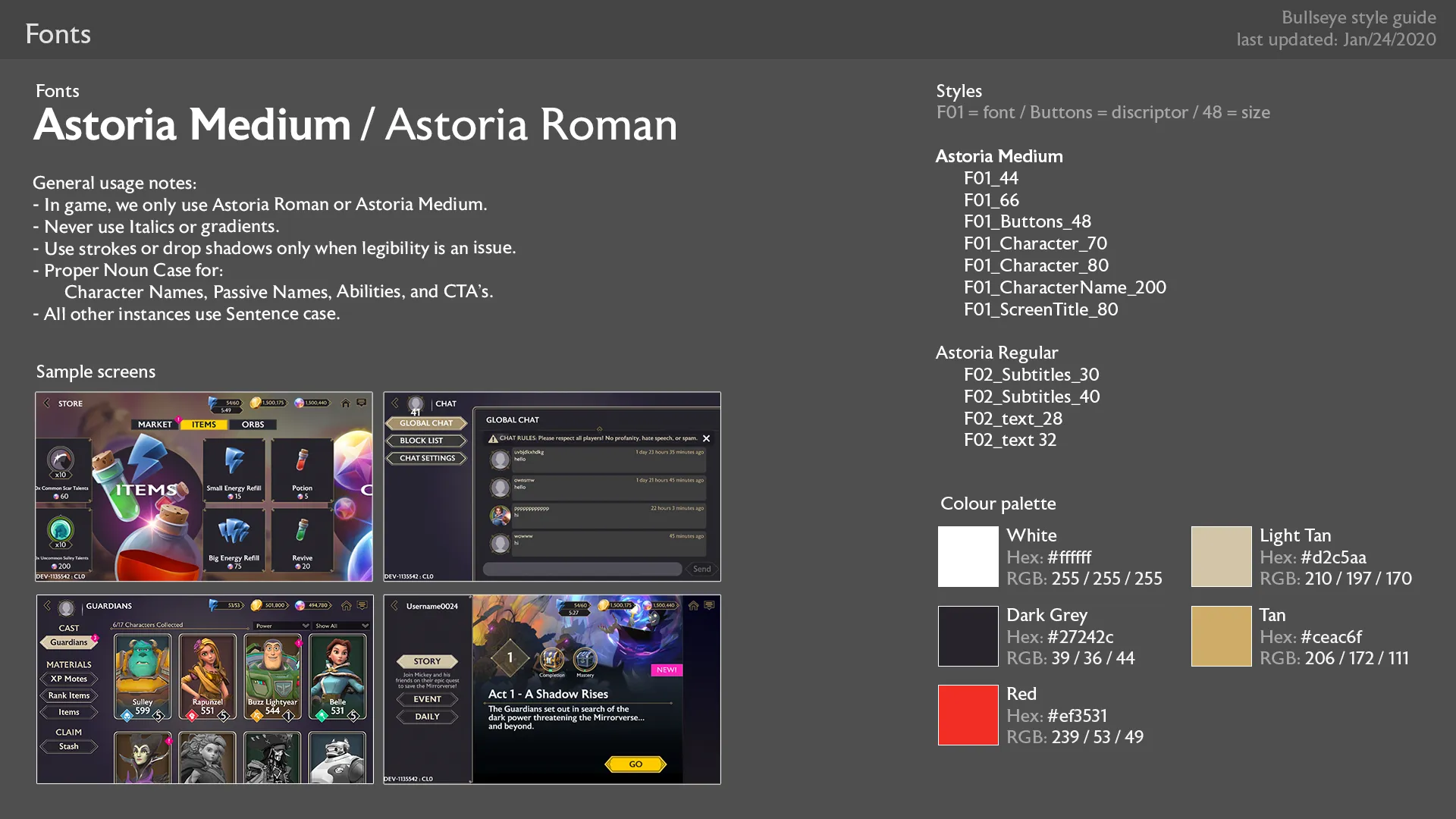
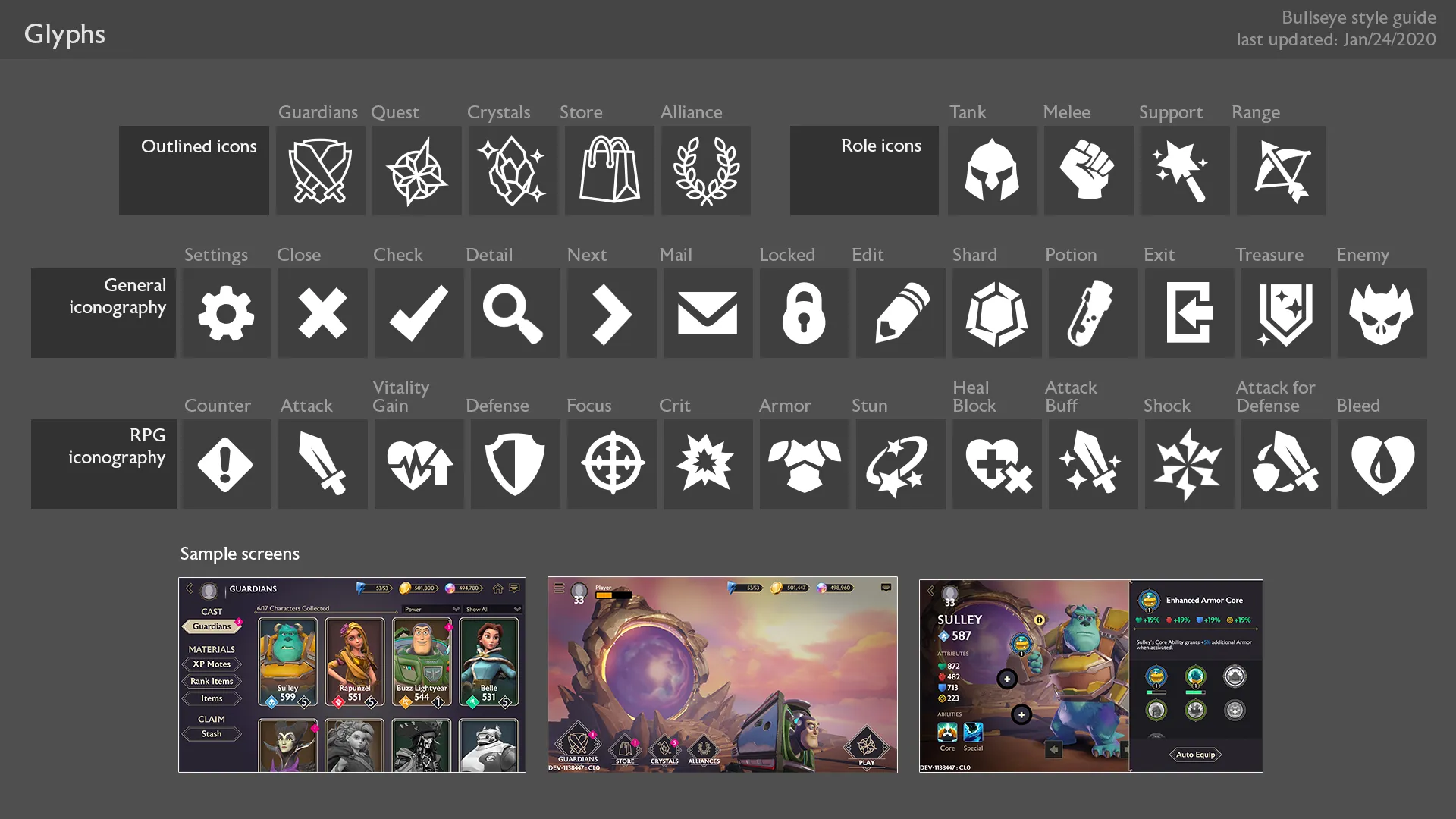
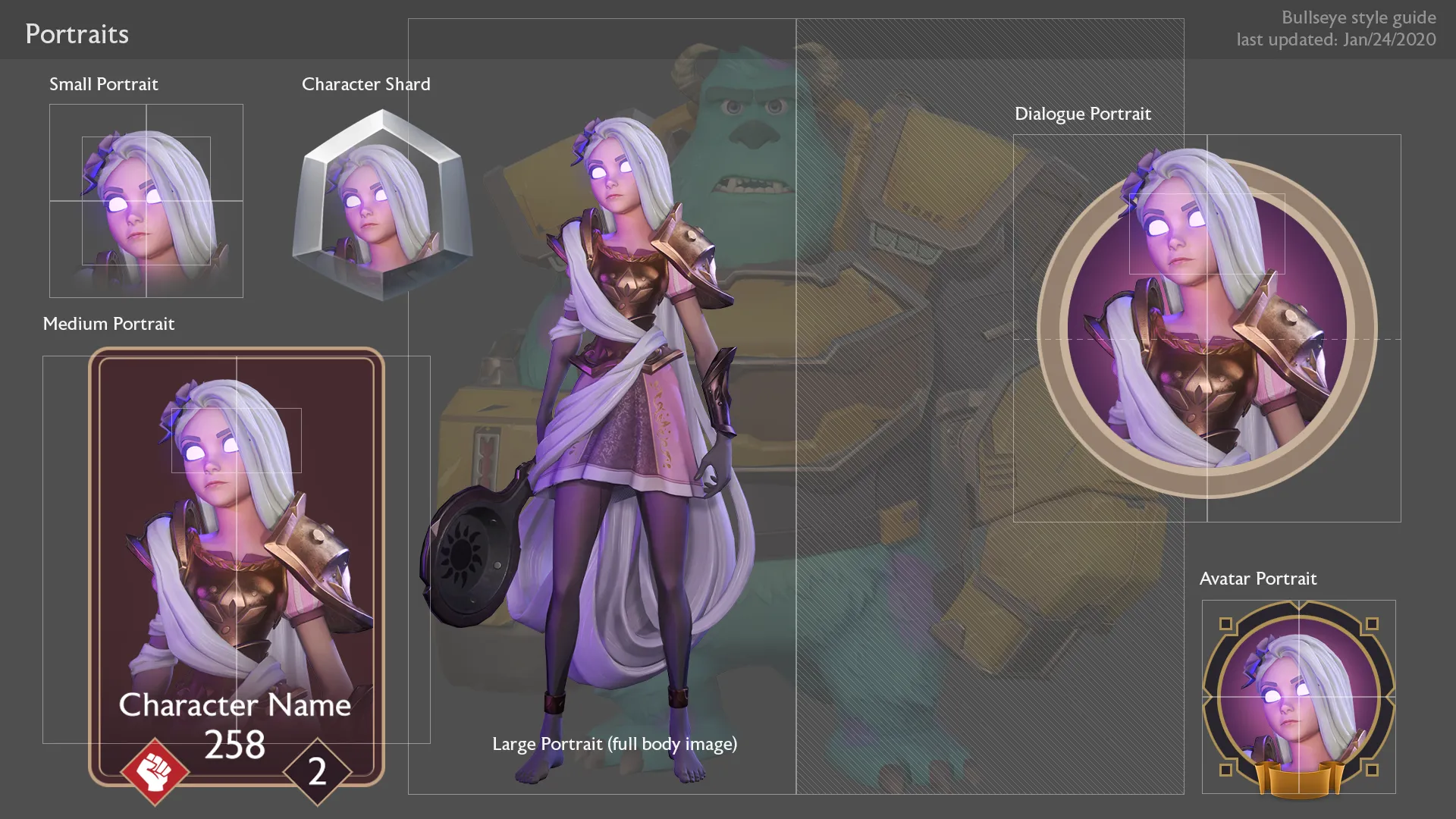
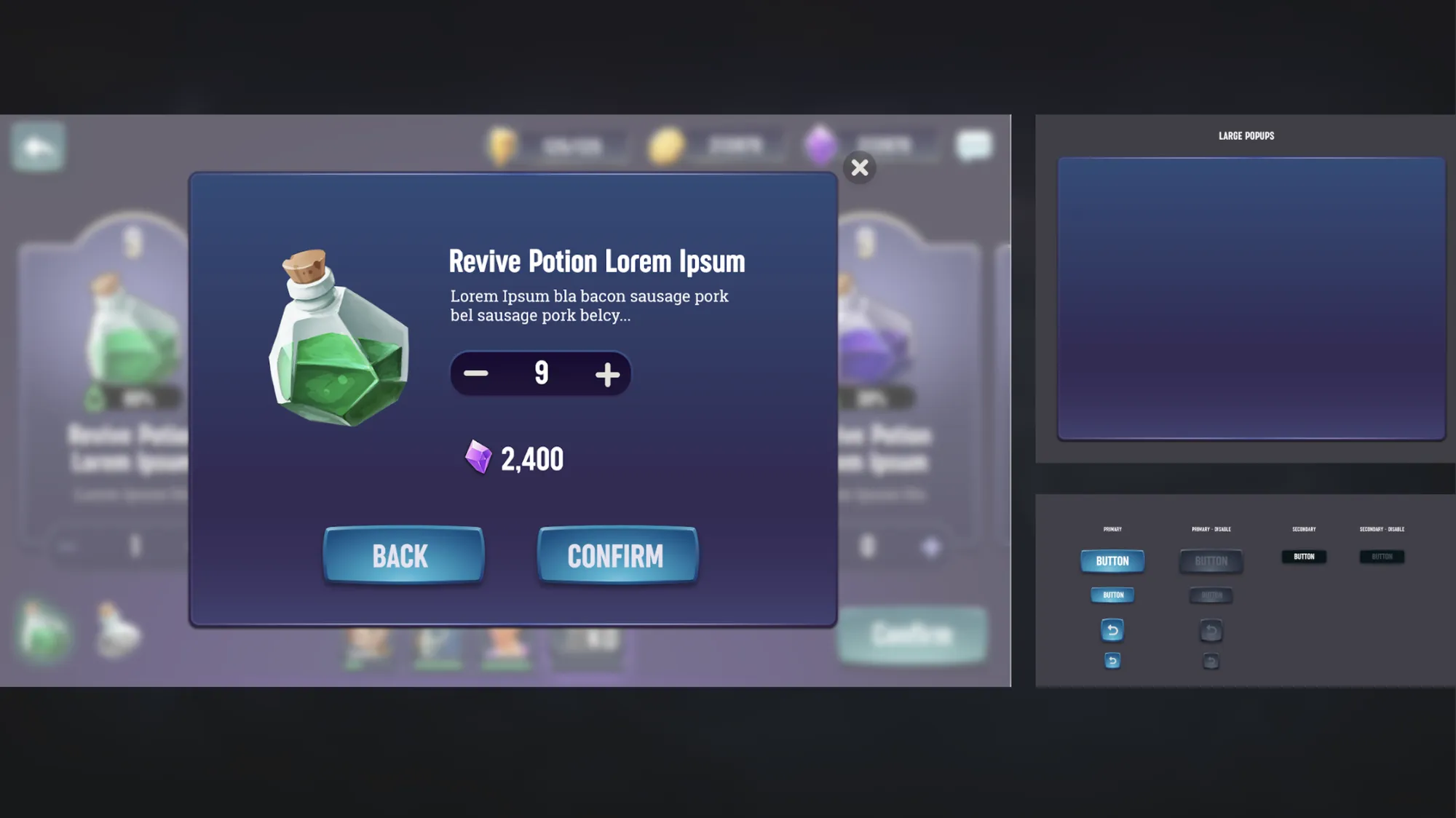
Styleguide V3, 2020. "Modern Fantasy" reboot. UXUI Direction: Roger Lee, UX Magicians. UI Art: Scott Lindsay.
Advocating for users and the design process
I advocated for UX and product design principles and worked to establish more human-centered design processes in the game development cycle. Much of the game team's history came from traditional AAA development and the tribal knowledge built into the studio's flagship, and ideas like Lean UX met resistance.
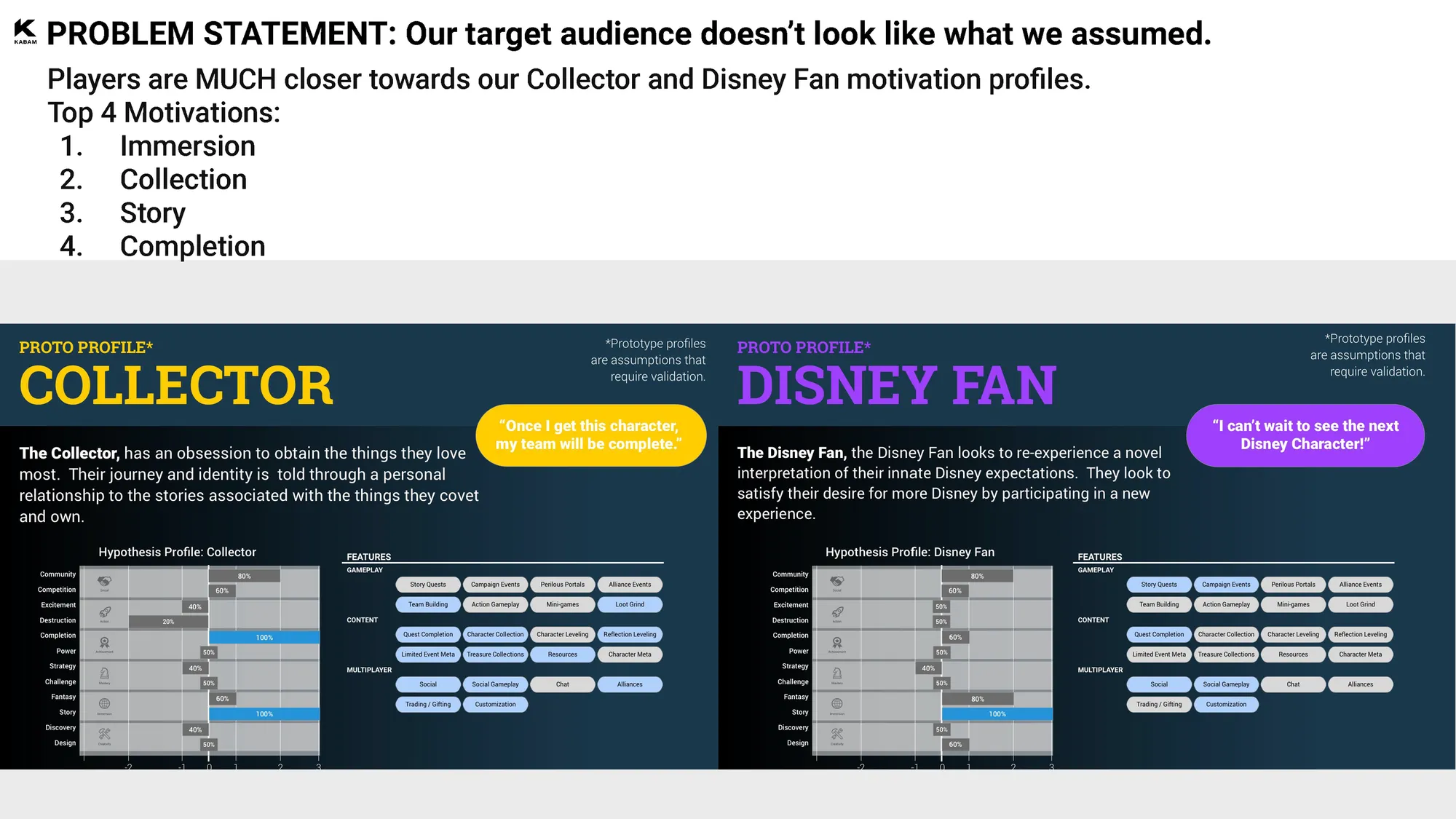
Some Lean and Agile processes proved controversial, but we found successes: compacted Design Sprints (a more "game developer" friendly version), prototype motivational profiles, and using and advocating for more user research.
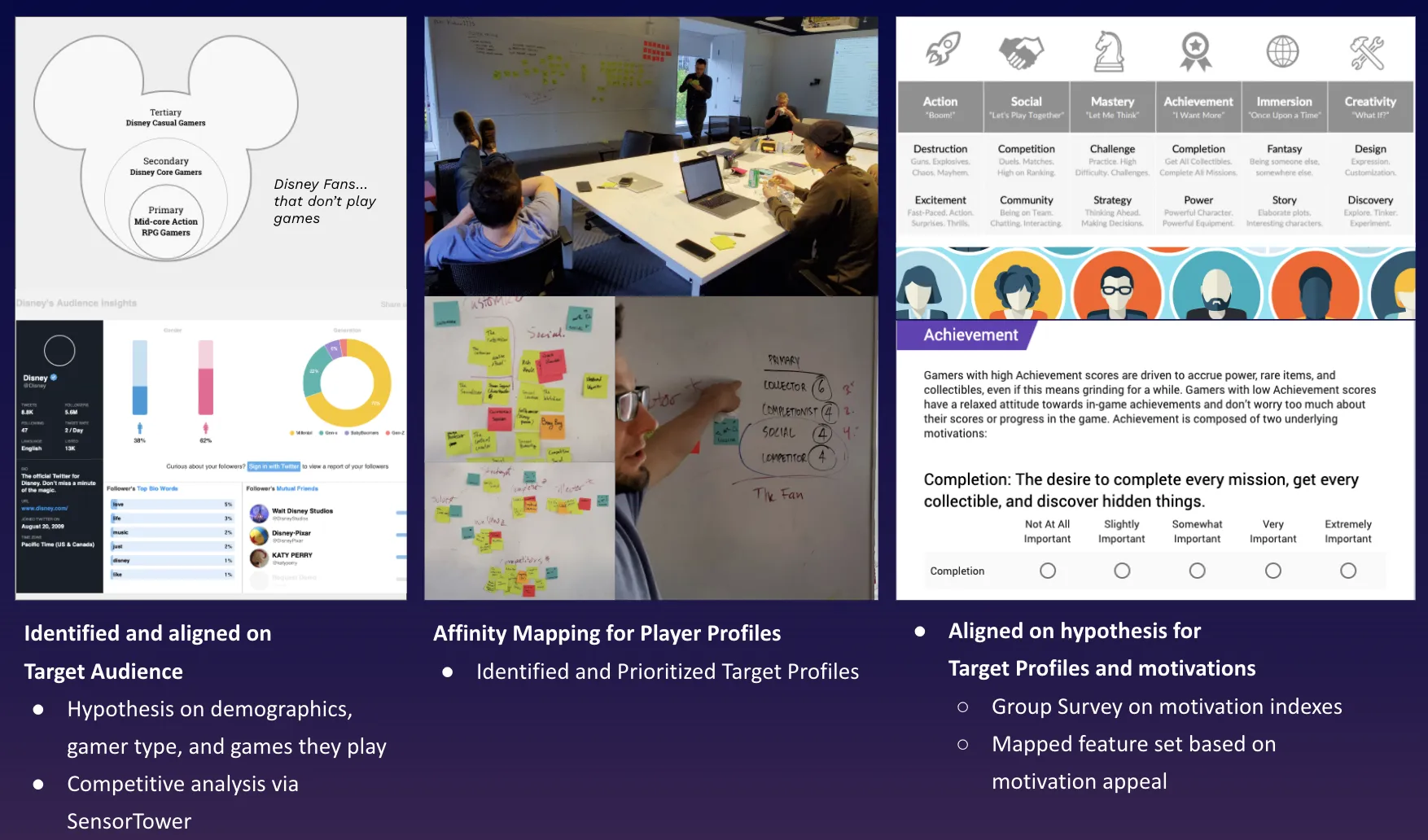
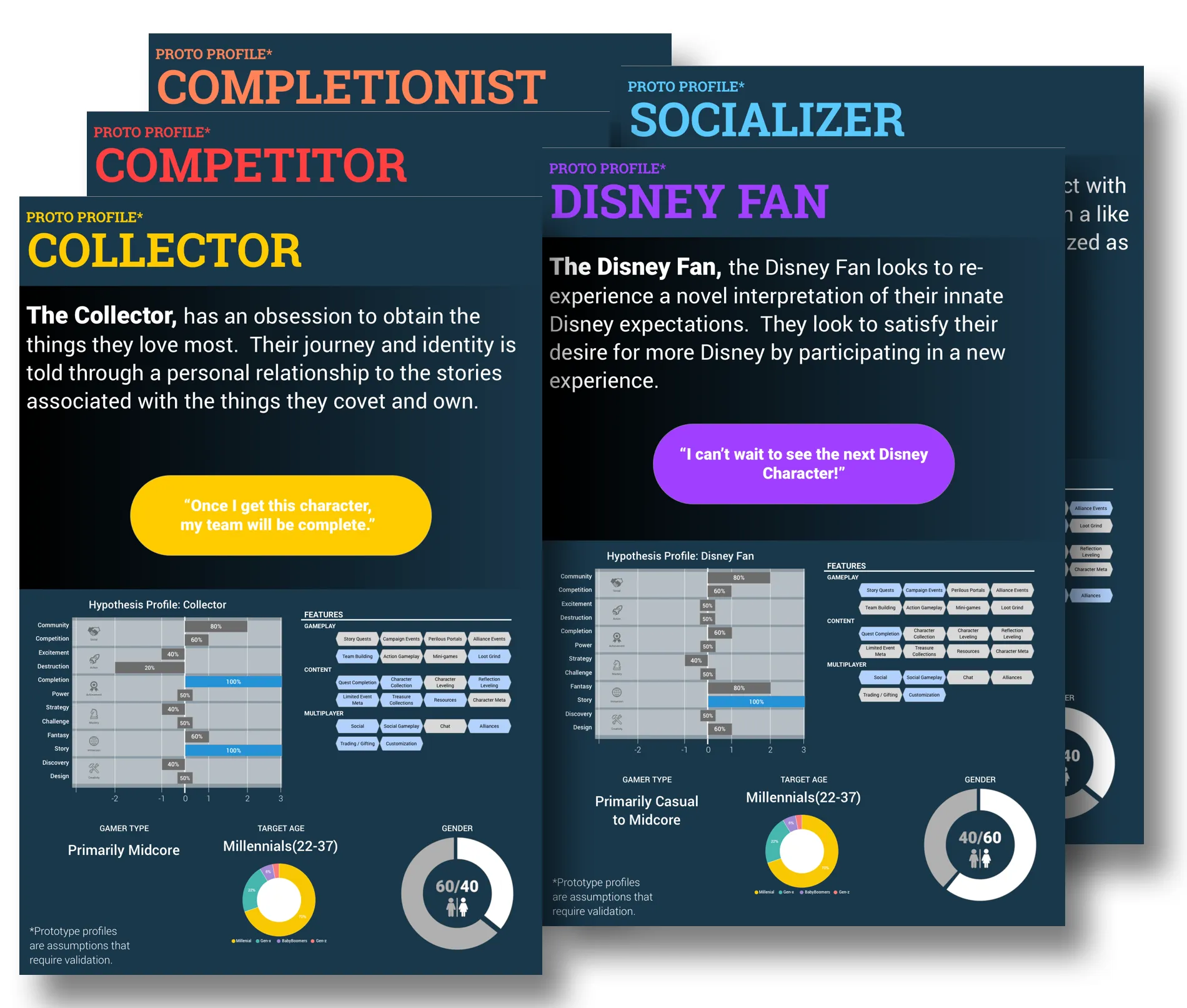
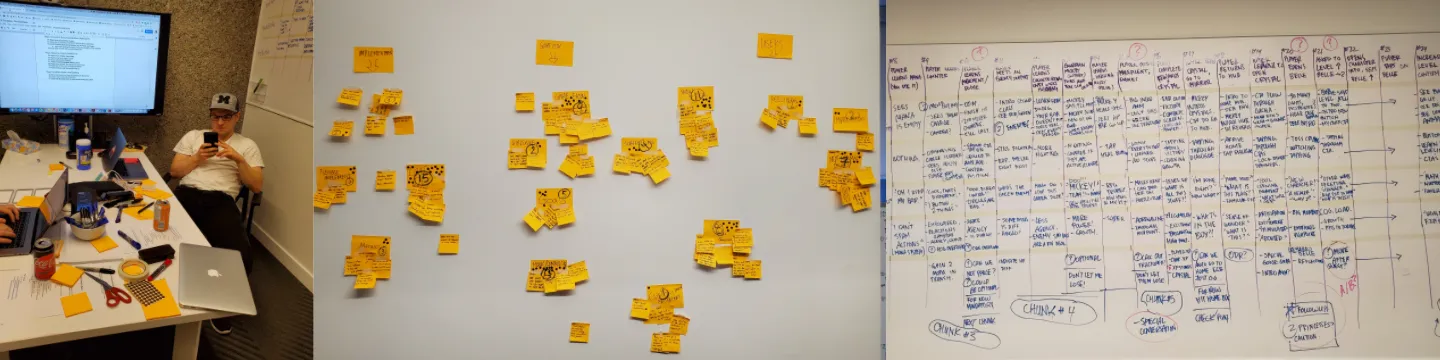
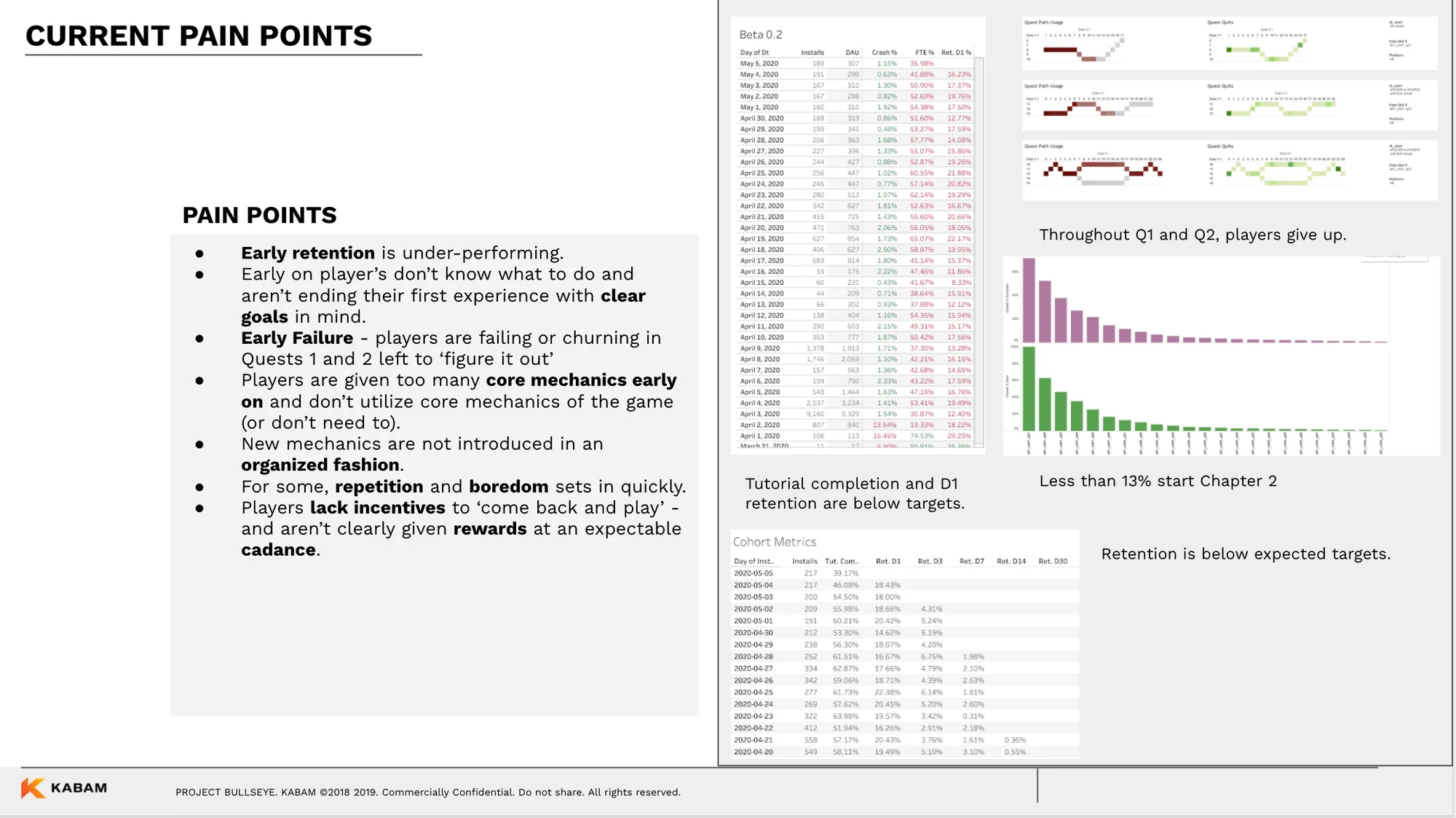
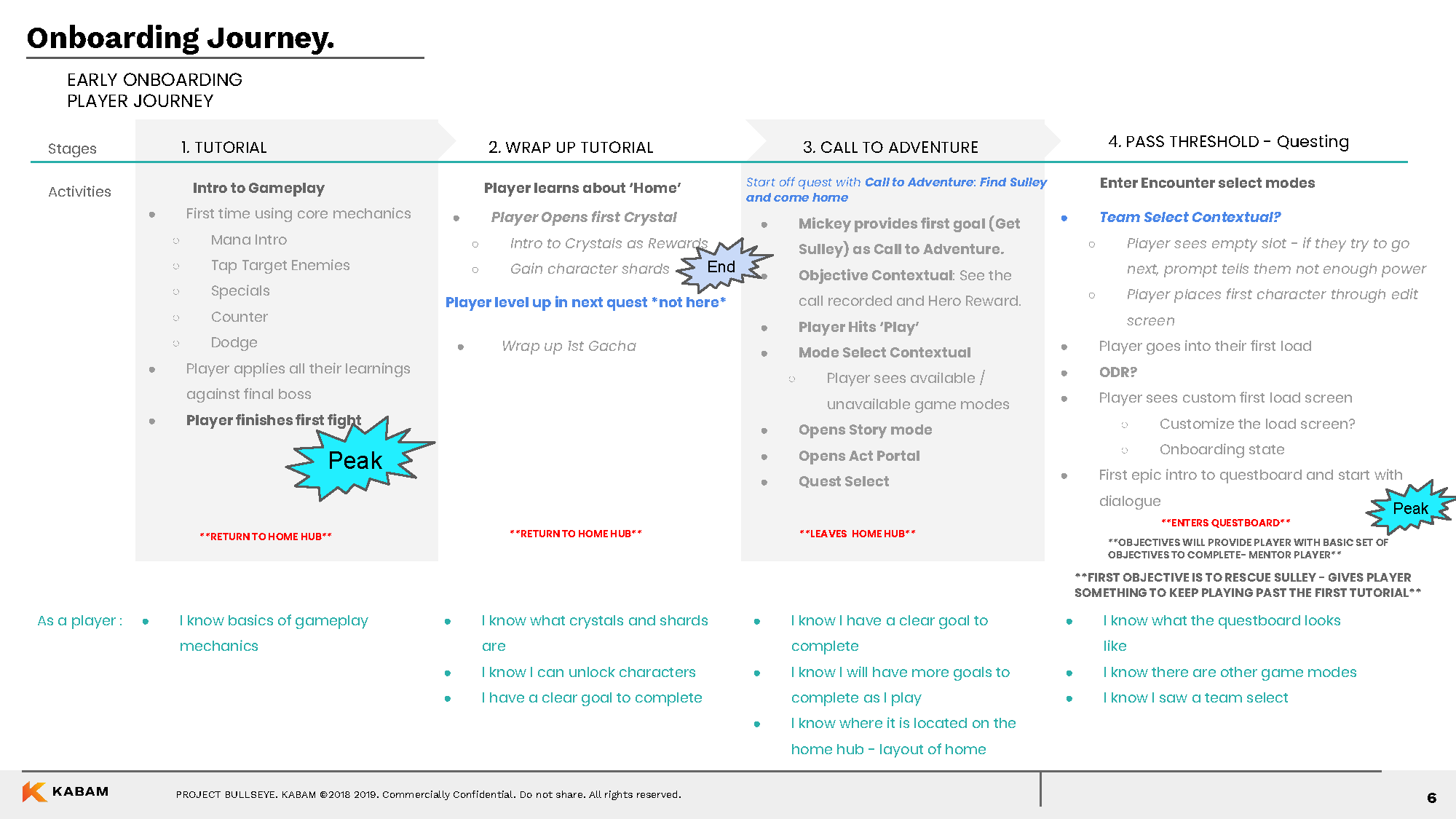
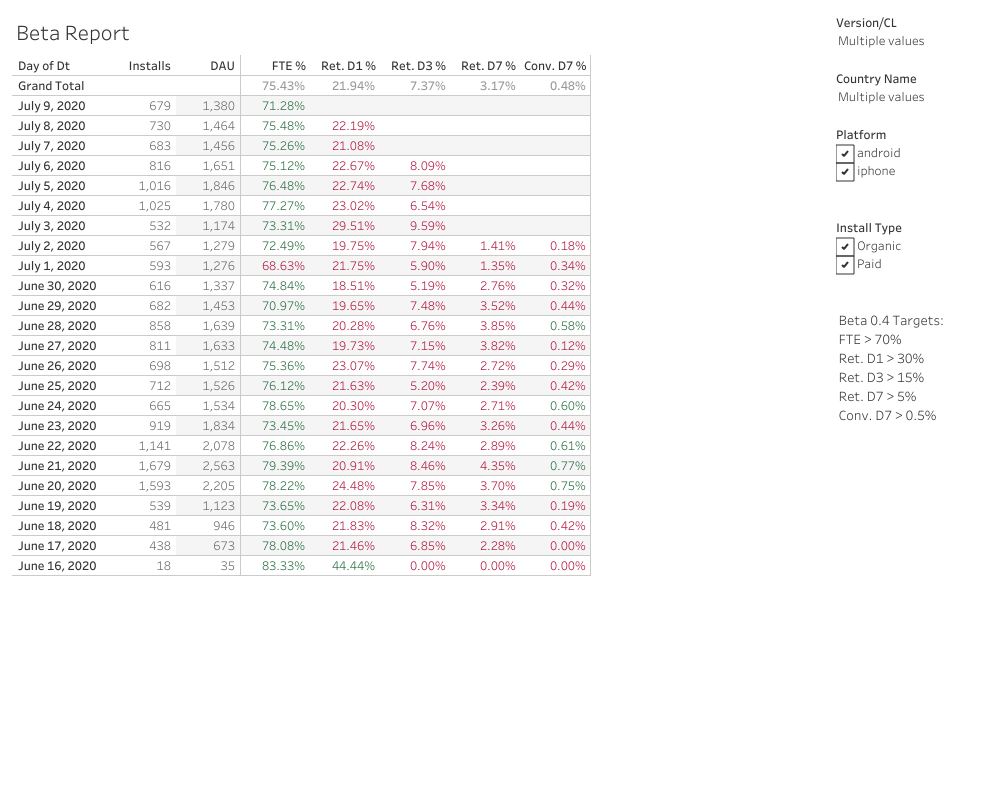
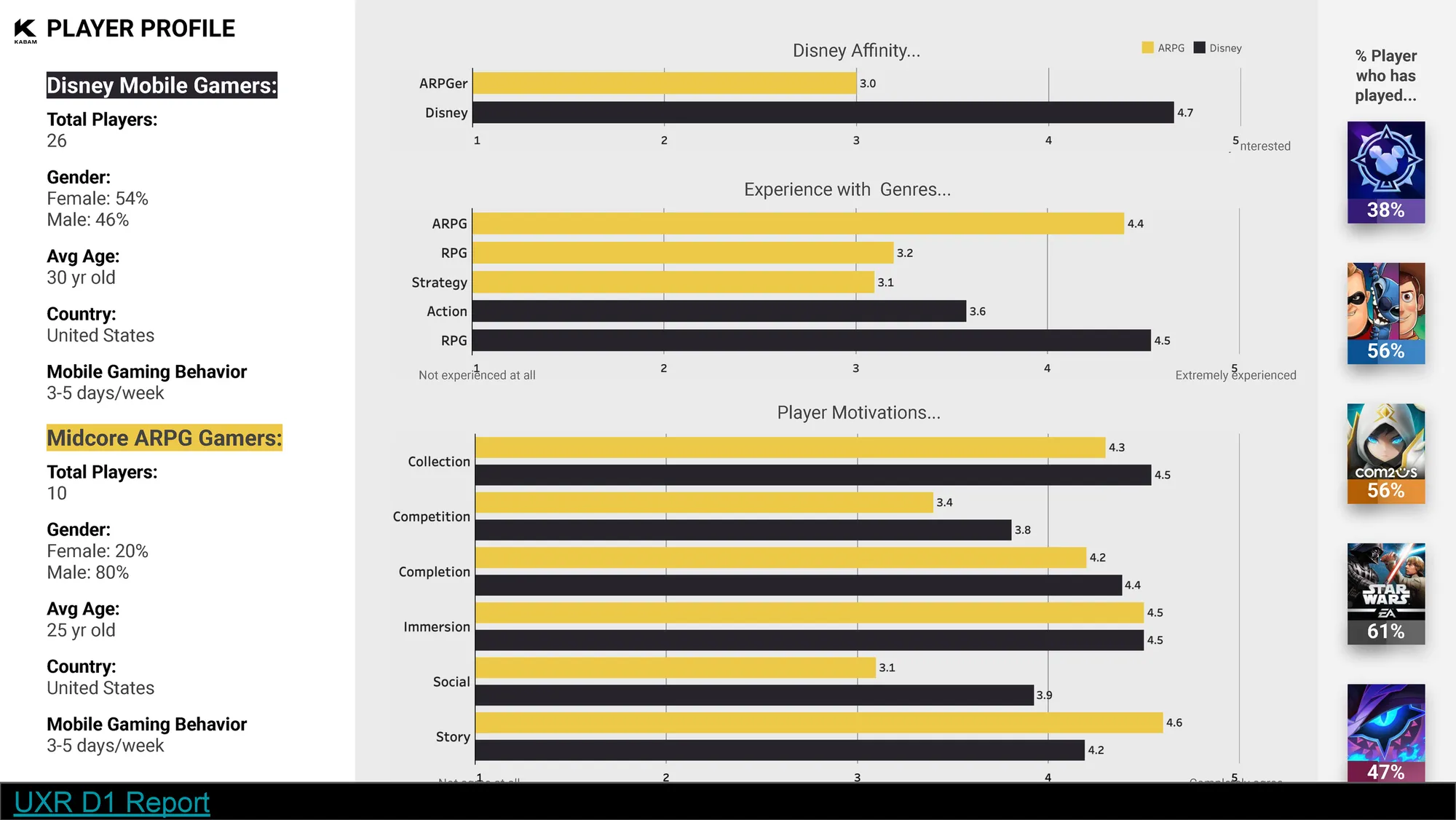
Target audience alignment exercises · Prototype player profiles · FTUE workshops · Initial FTUE results were disappointing, but alongside User Research we identified key challenges to onboarding, and solutions for future iterations · FTE iteration · FTE performance above targets
Design thinking and product leadership
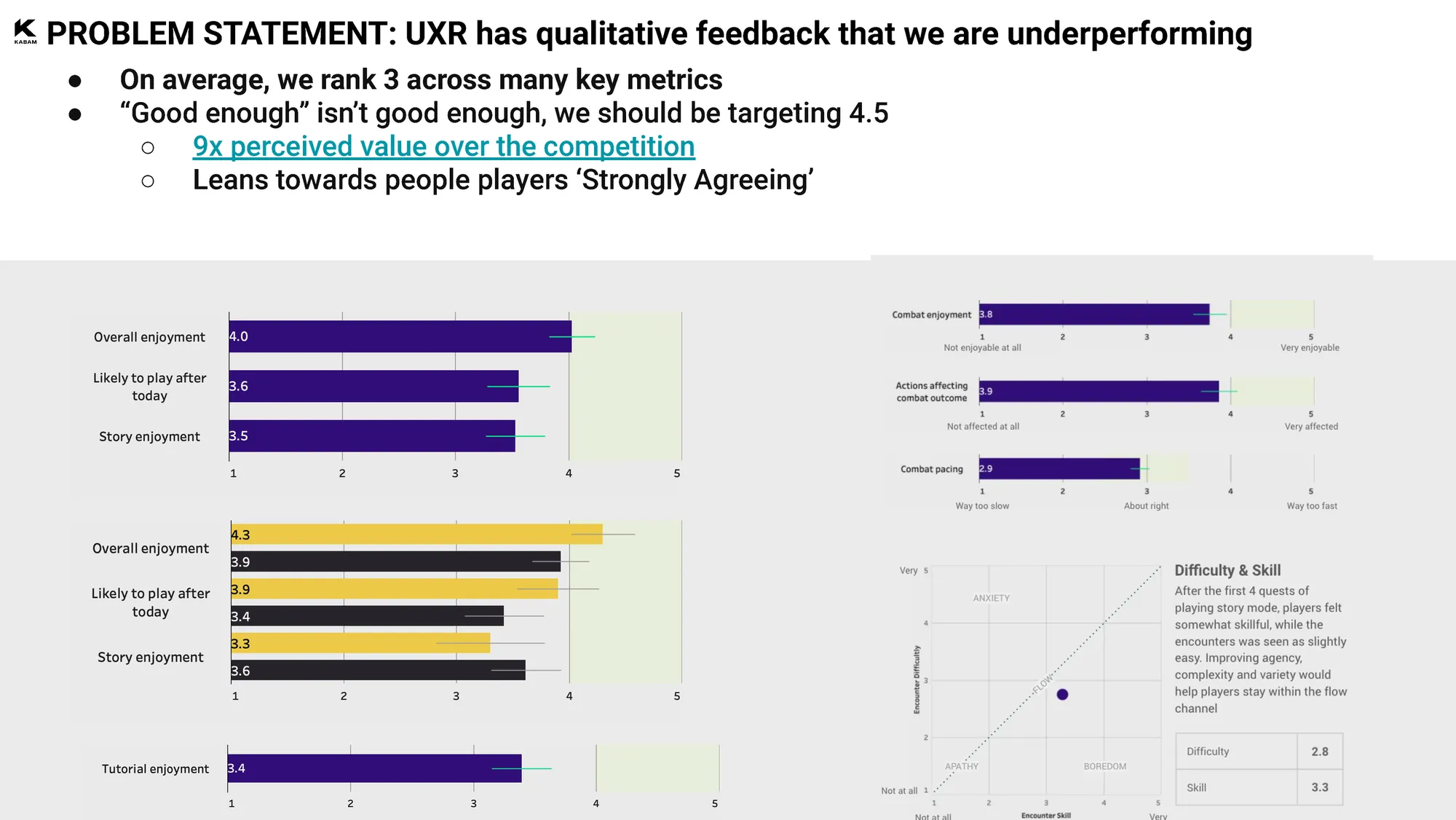
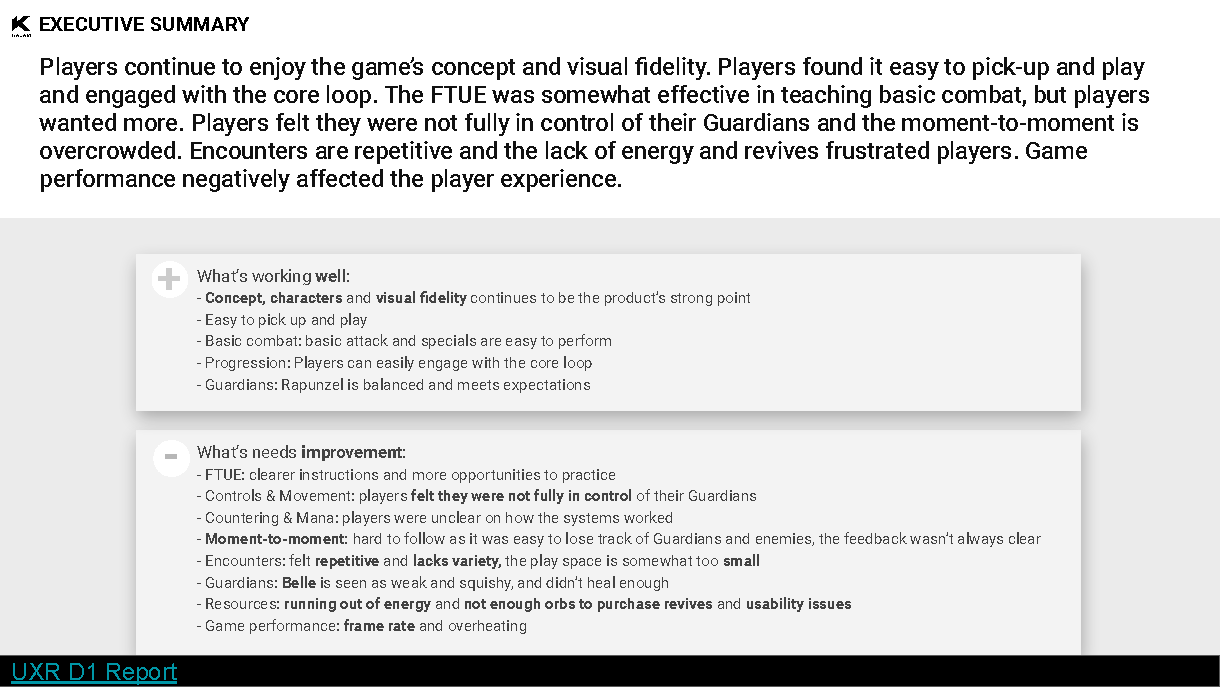
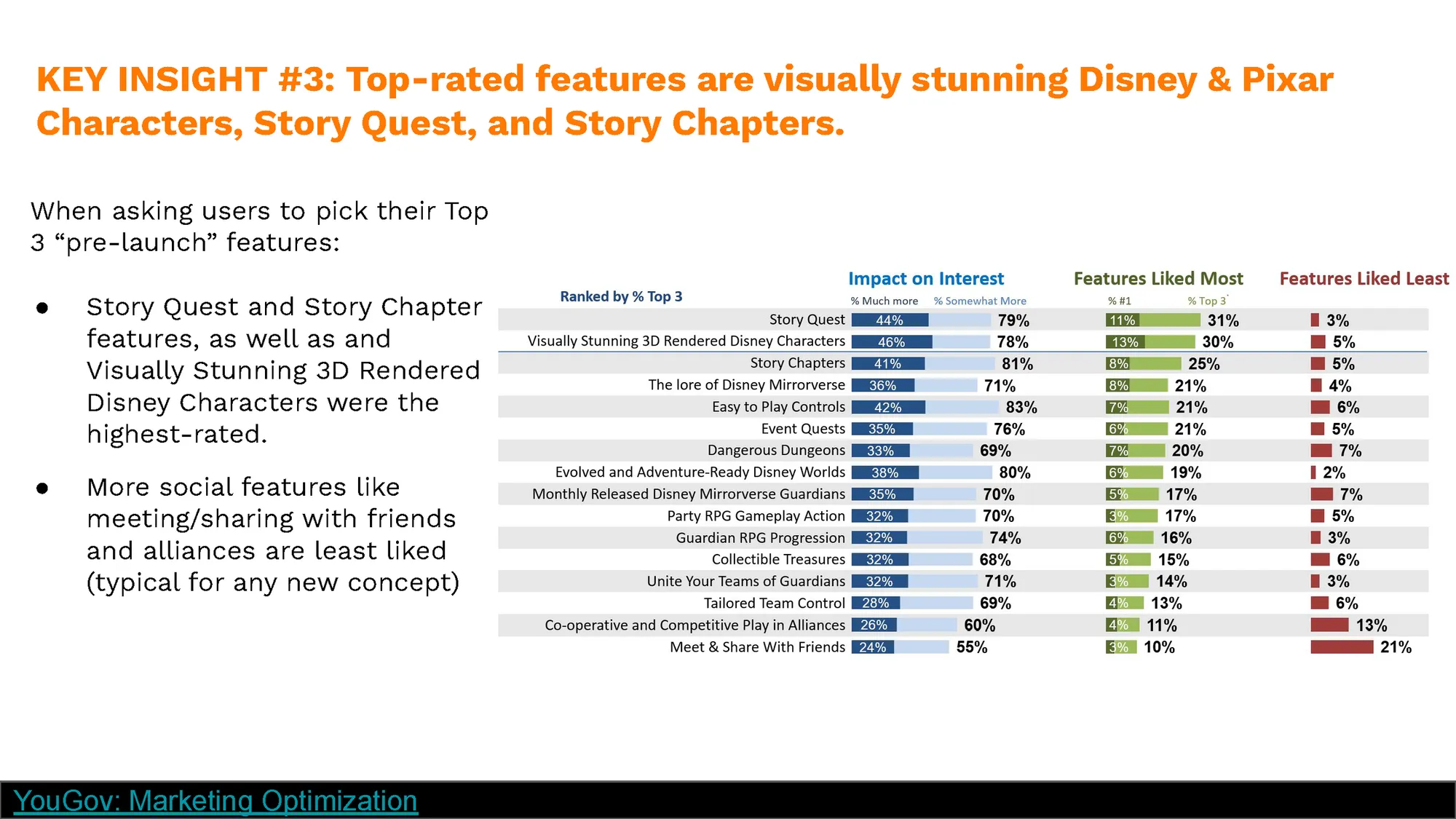
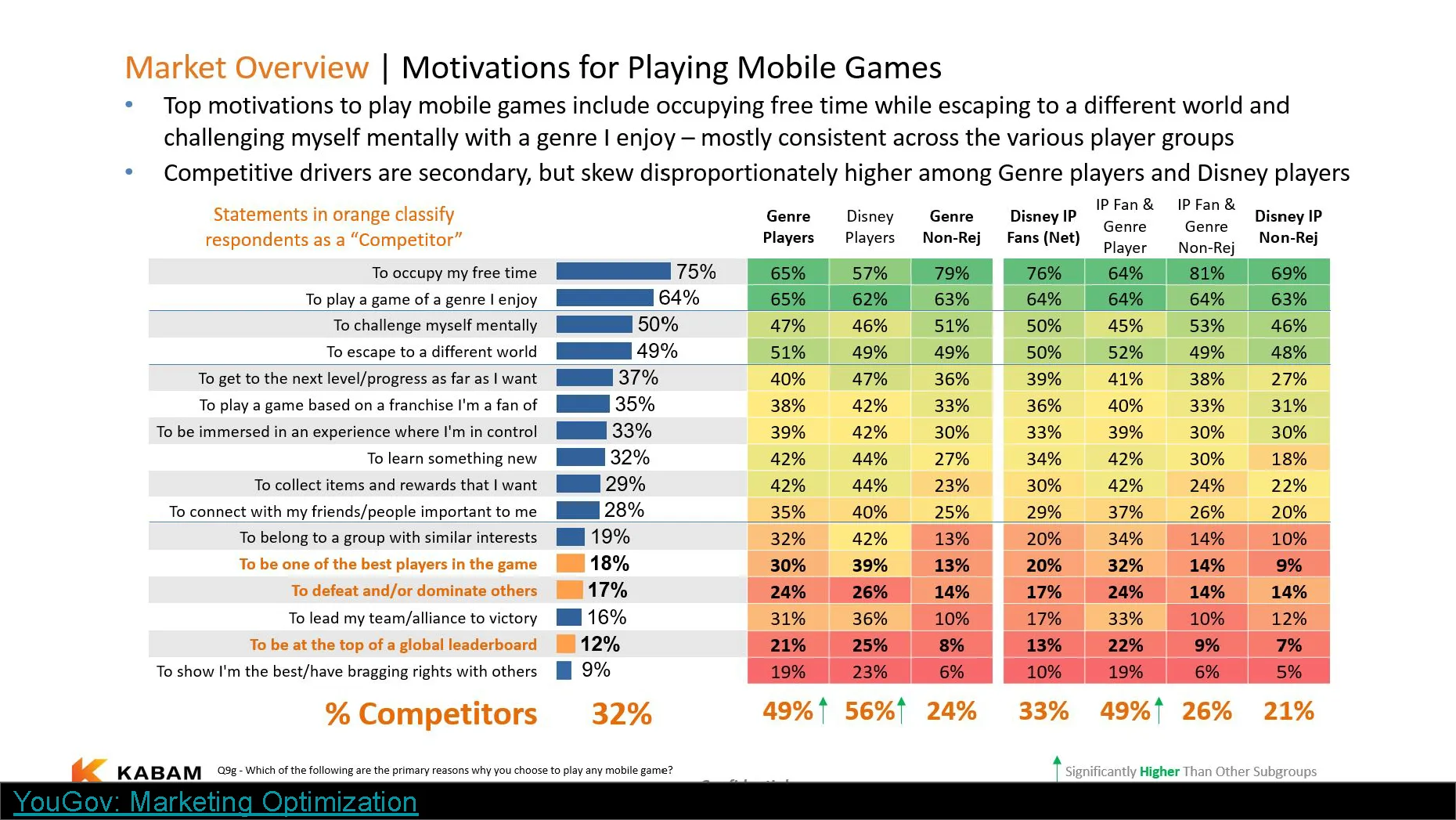
Throughout development we went through rocky changes in product leadership and realigned on parts of the product vision. I contributed as part of product leadership in product owner groups, workshops and key stakeholder meetings. This culminated in difficult decisions about pivoting the product, as user adoption was significantly lower than expected. We joined User Research to triage and examine the issues, and became a critical voice in product iteration proposals.
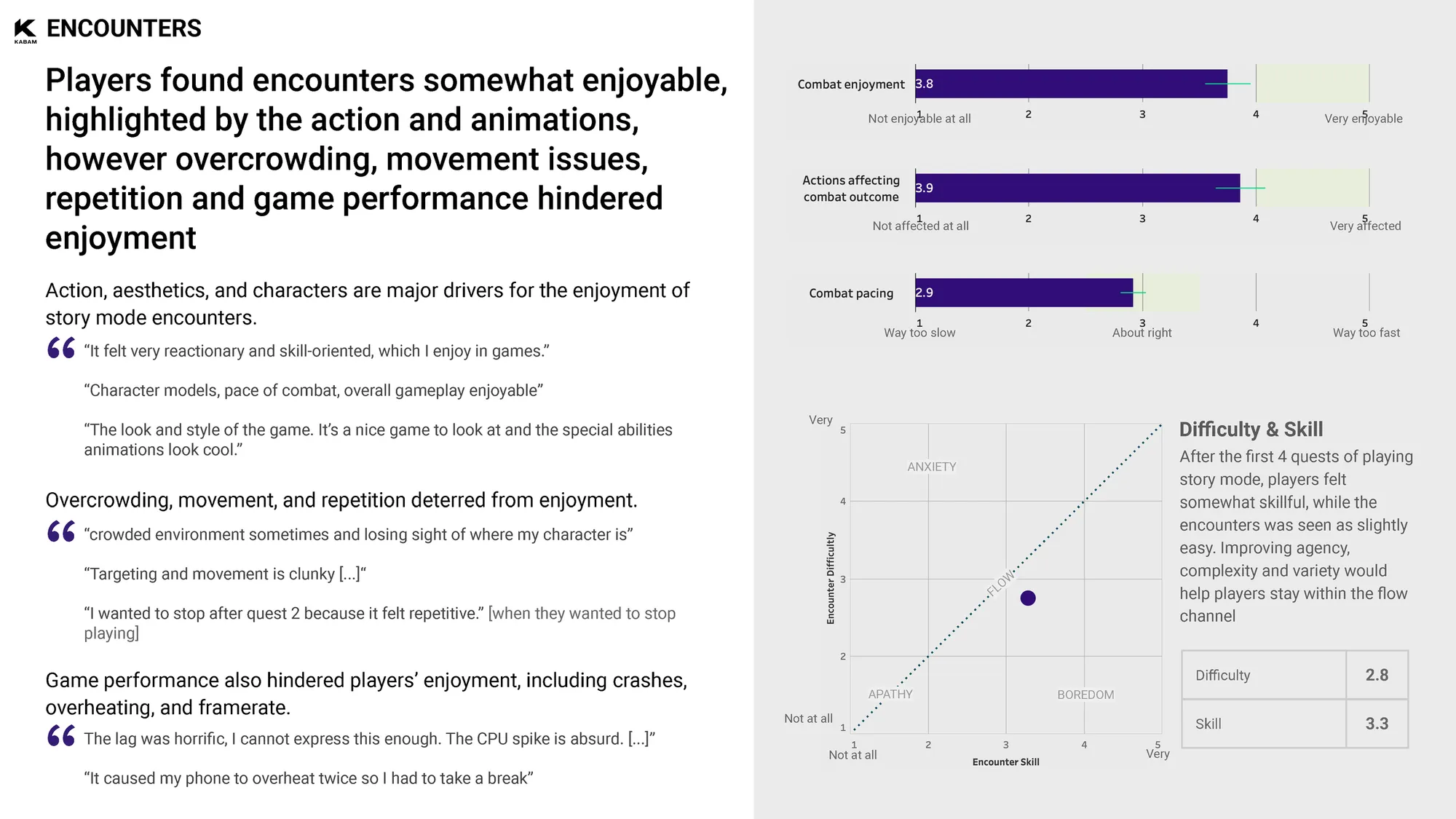
Pivoting in a pandemic, a radical revert
As British Columbia went into quarantine in mid-March, we moved to working remote. With prior experience of remote tools (digital whiteboards, a Slack migration) I helped secure the team's tools and move everyone to working from home. Heading into summer with our second ship date looming, our initial "half-idle, half-action" RPG had not created a sticky experience. The game team split into several strike teams to pivot toward a more traditional Action-RPG brawler.
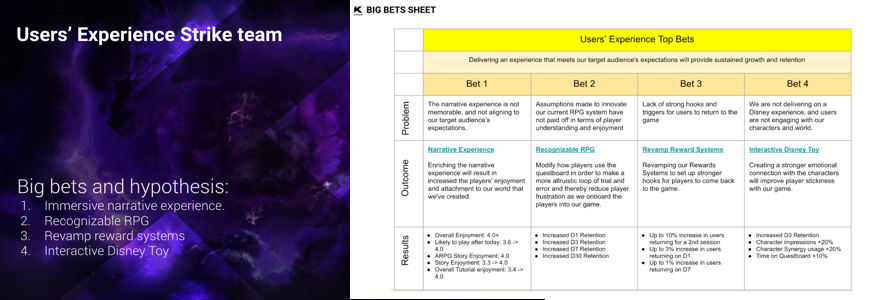
Beta 0.8 and beyond
With KPIs and user adoption at unsustainably low rates, the game team made several drastic pivots to reposition the product in the action/brawler RPG genre. The product went into maintenance mode while the team went as far as rebooting core gameplay, from a squad-based strategy game to a twin-stick, single-character action brawler. I contributed in several key areas.
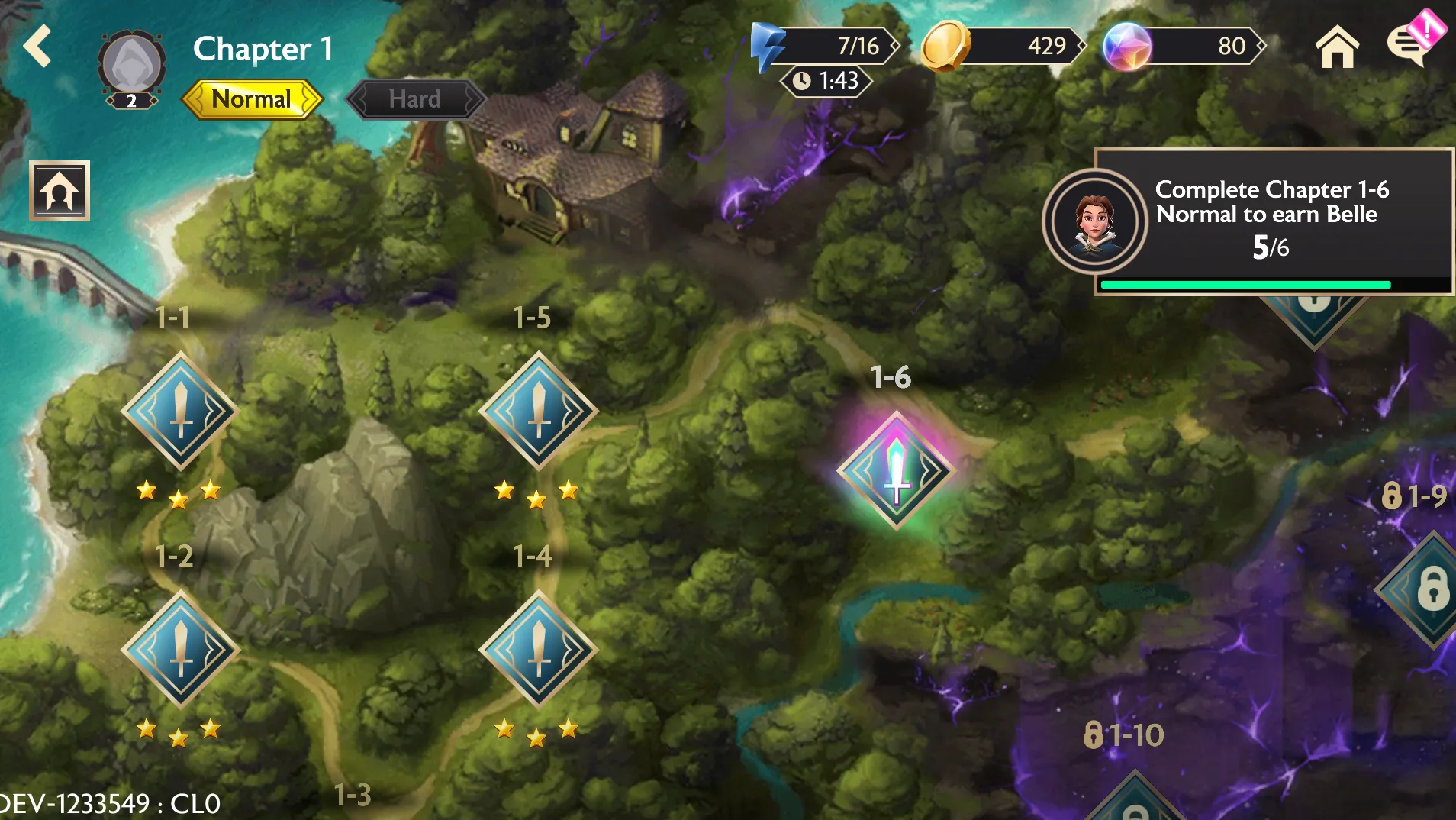
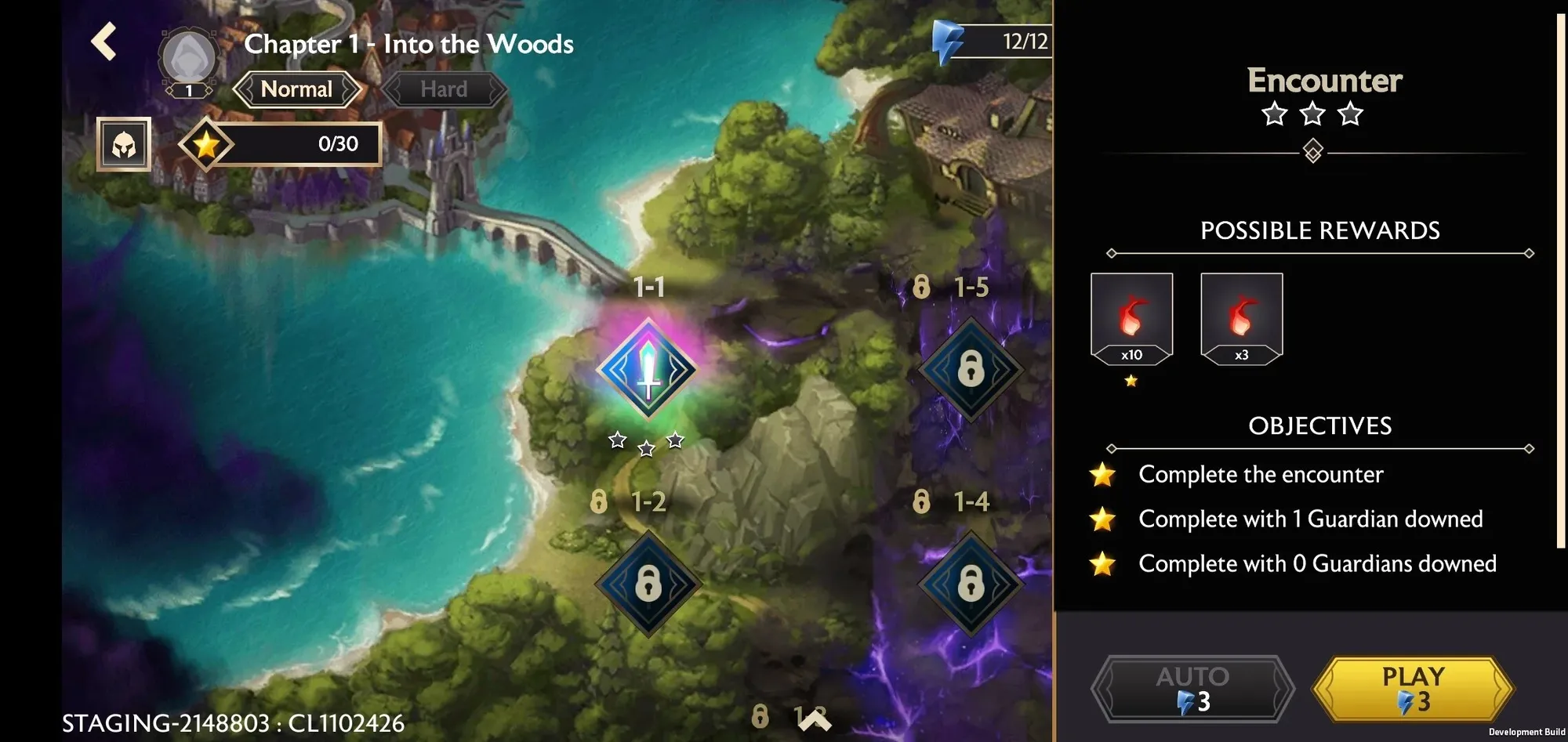
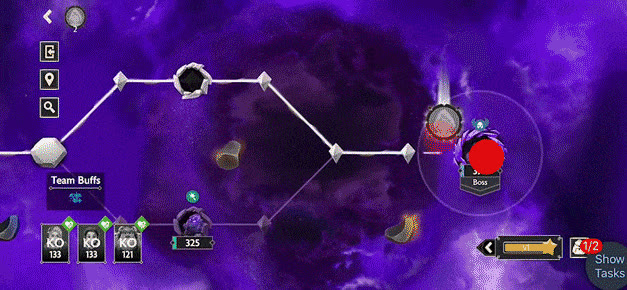
Players attempting to navigate and revive teams after losing · The questing world map, post 0.8
Our hypothesis was to move to a more traditional world map, with environments players wanted to explore. Our user research indicated players were most motivated by story and narrative. We also believed a more traditional star-objective system would retain more players by getting them deeper into the quest content. That seemed straightforward, but adapting the previous systems and technology proved quite a feat.
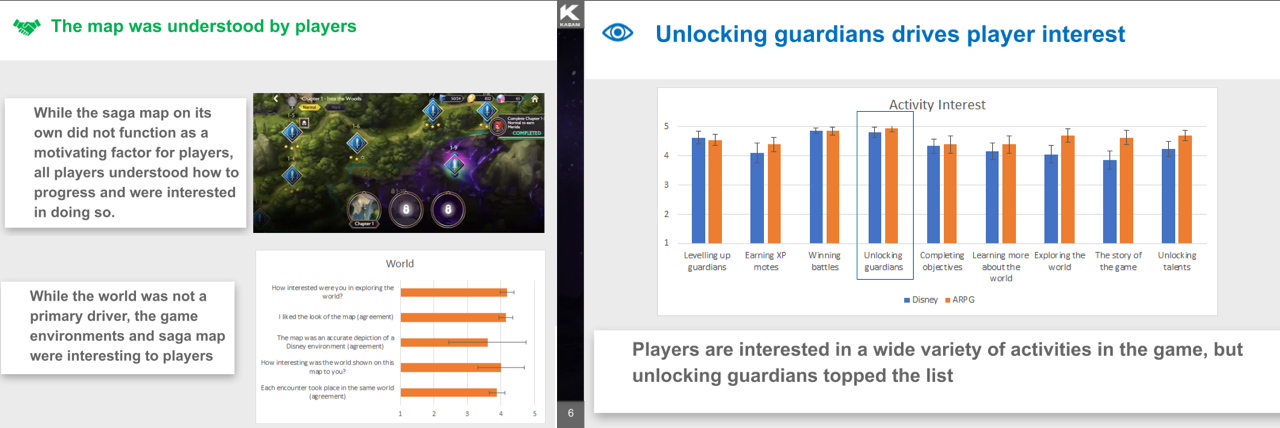
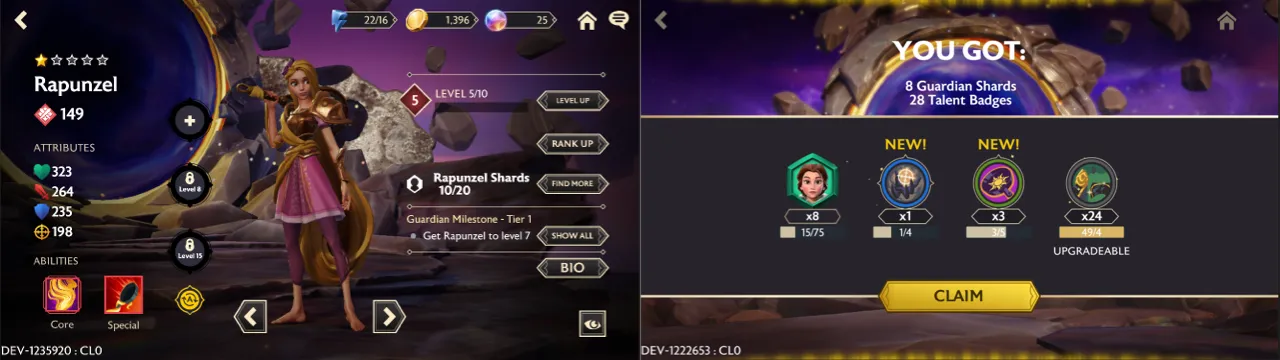
Quantitative research showed players understood how to use and navigate the map · Old progression systems tried to combine many different functions and resources
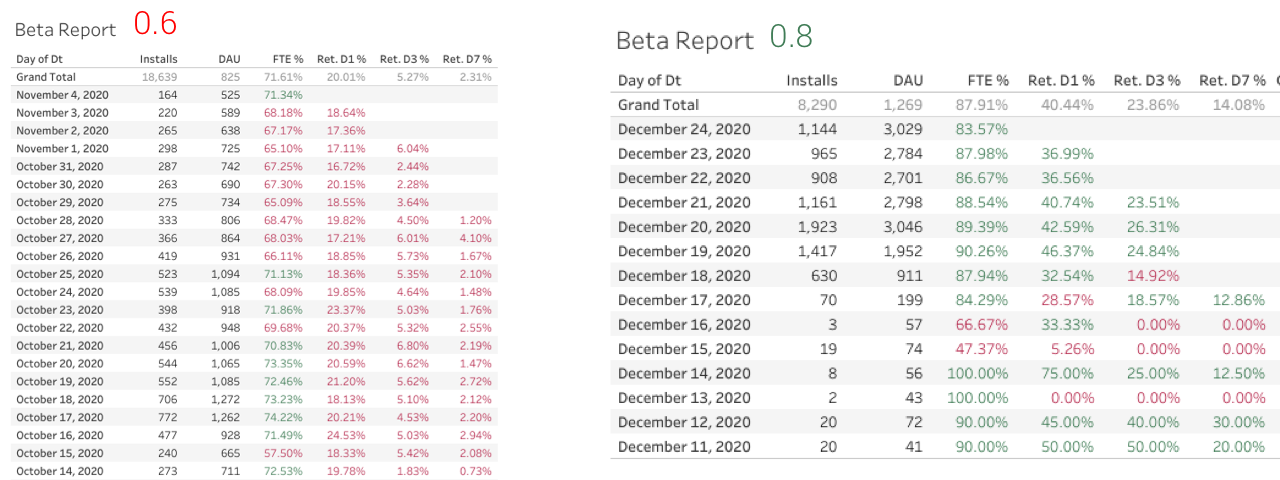
The results of Beta 0.8 gave a much-needed lift across KPIs and engagement. D1 retention jumped from under 20% to over 80%, with a surprising sustained lift in D7 from under 3% to over 23%. Chapter 1 completion jumped from under 20% to 32%. Early user research gave quantitative evidence that players were enjoying the improvements.
Systems and documentation
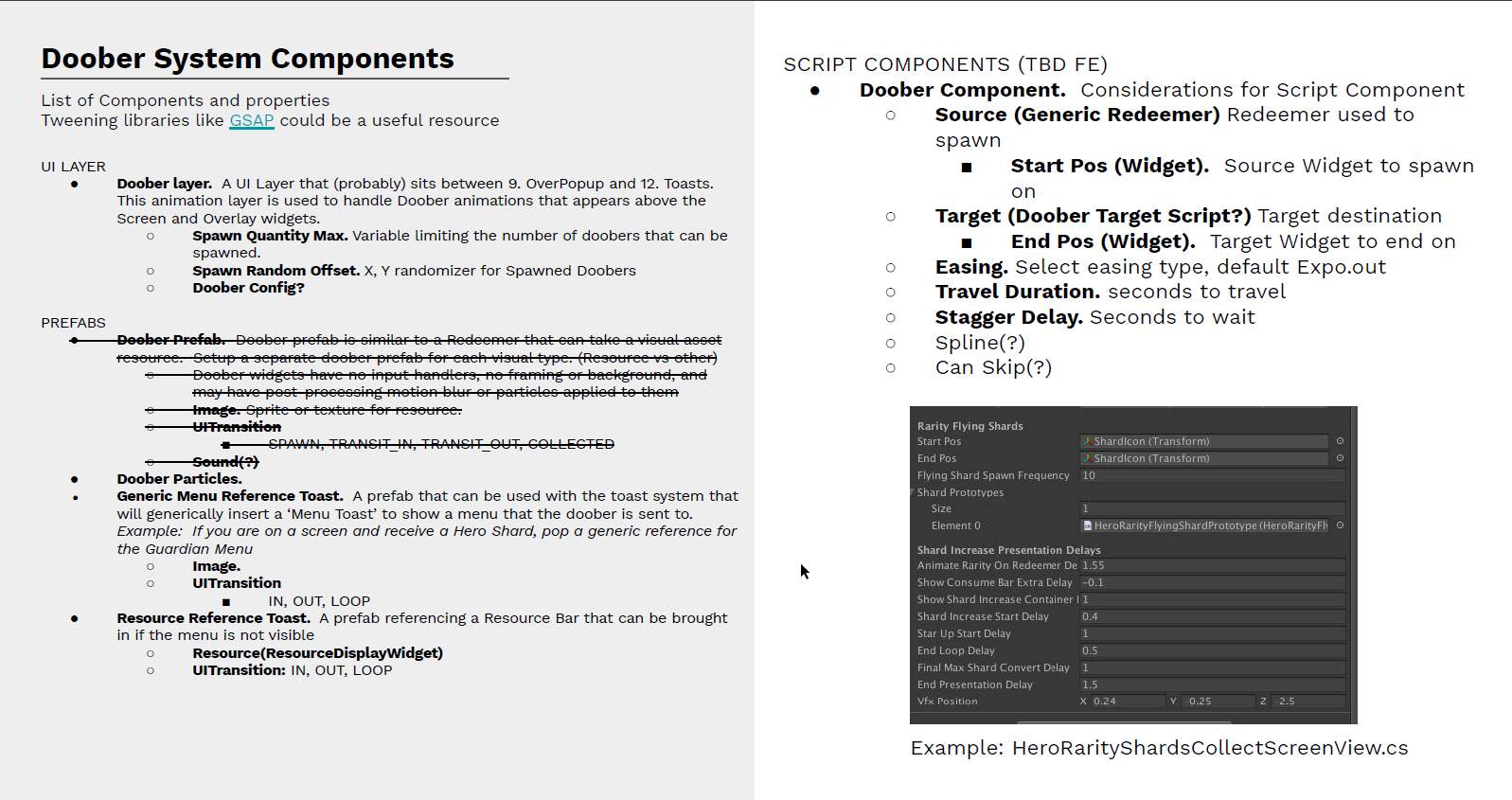
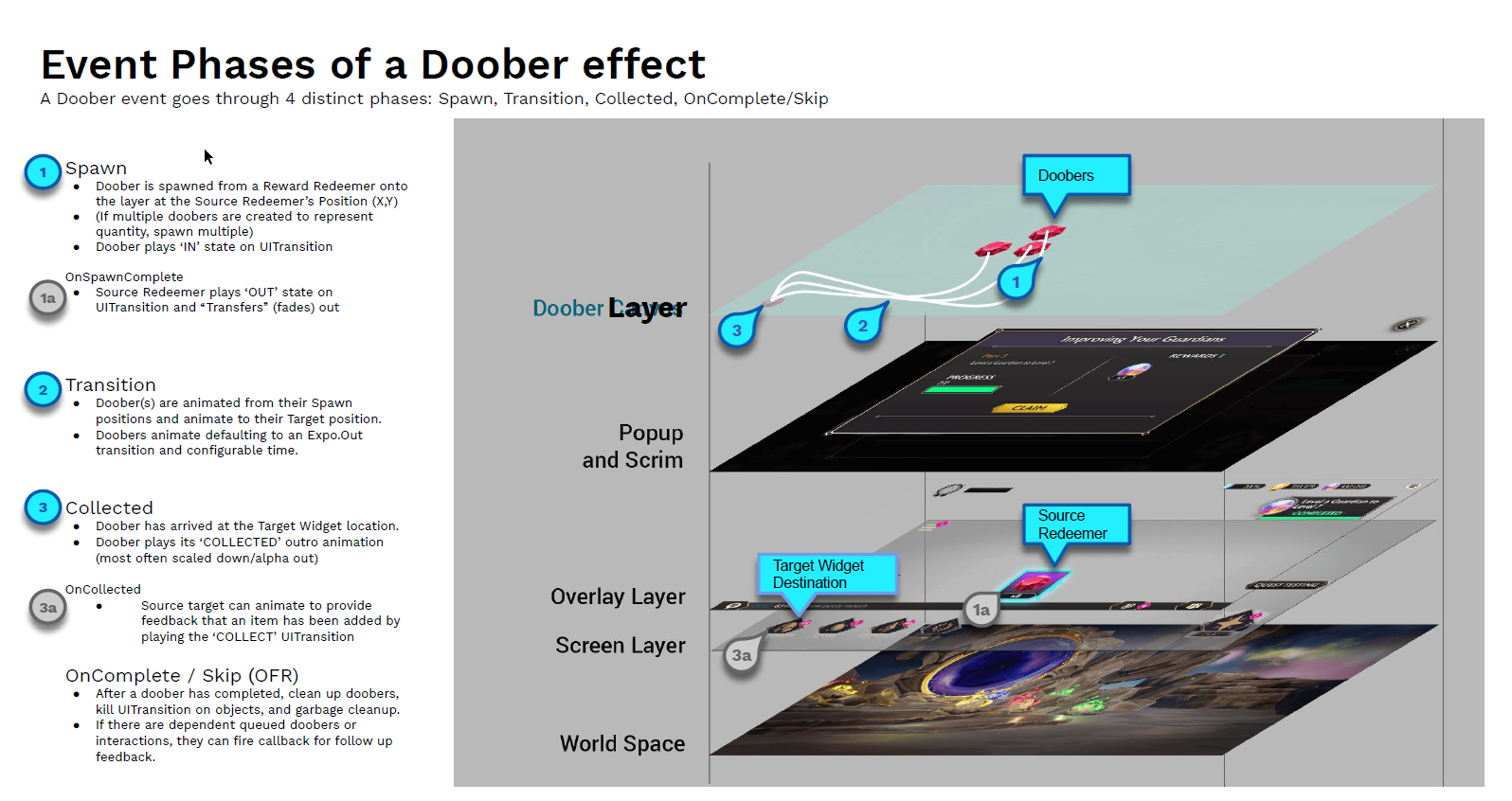
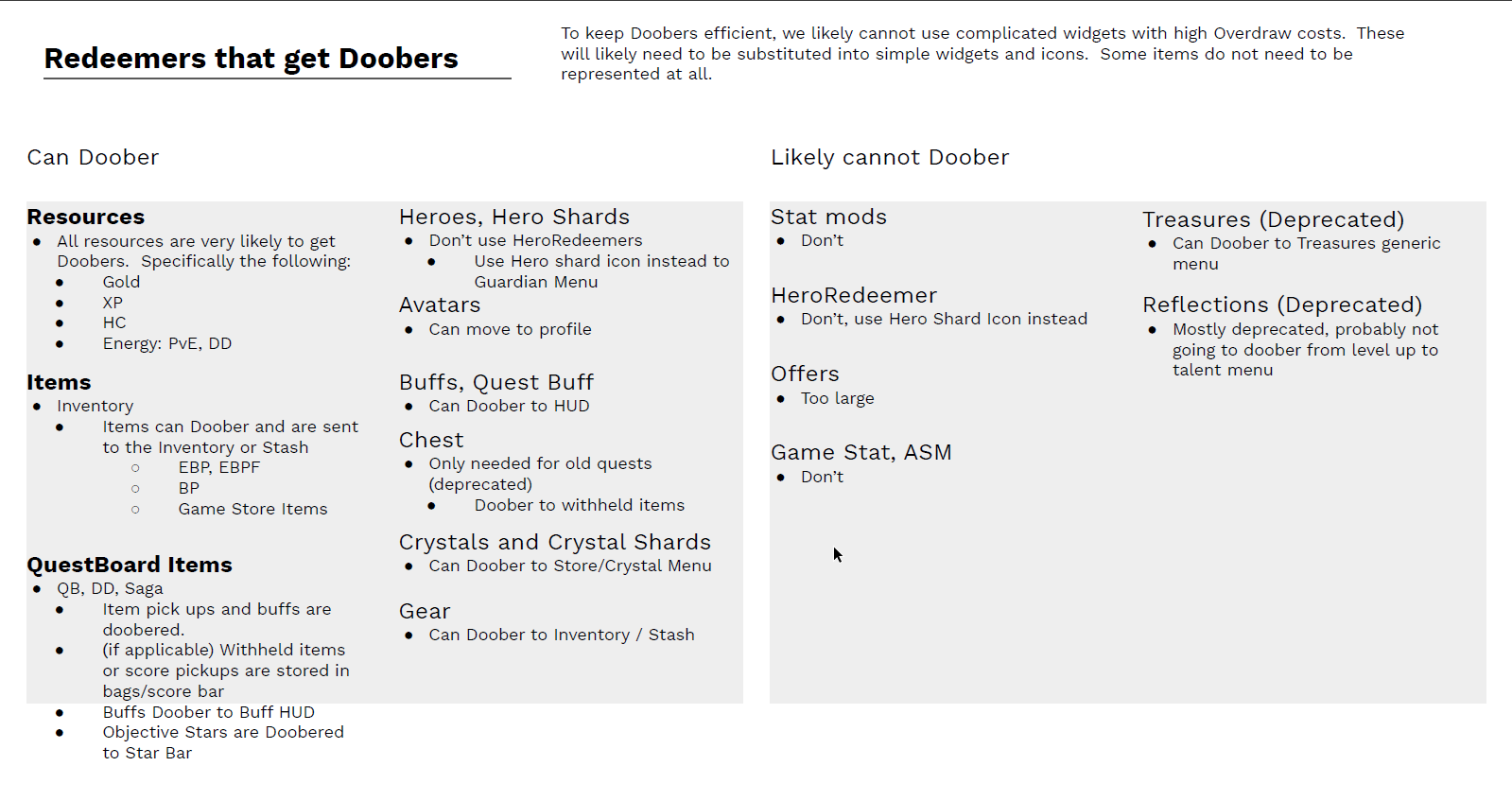
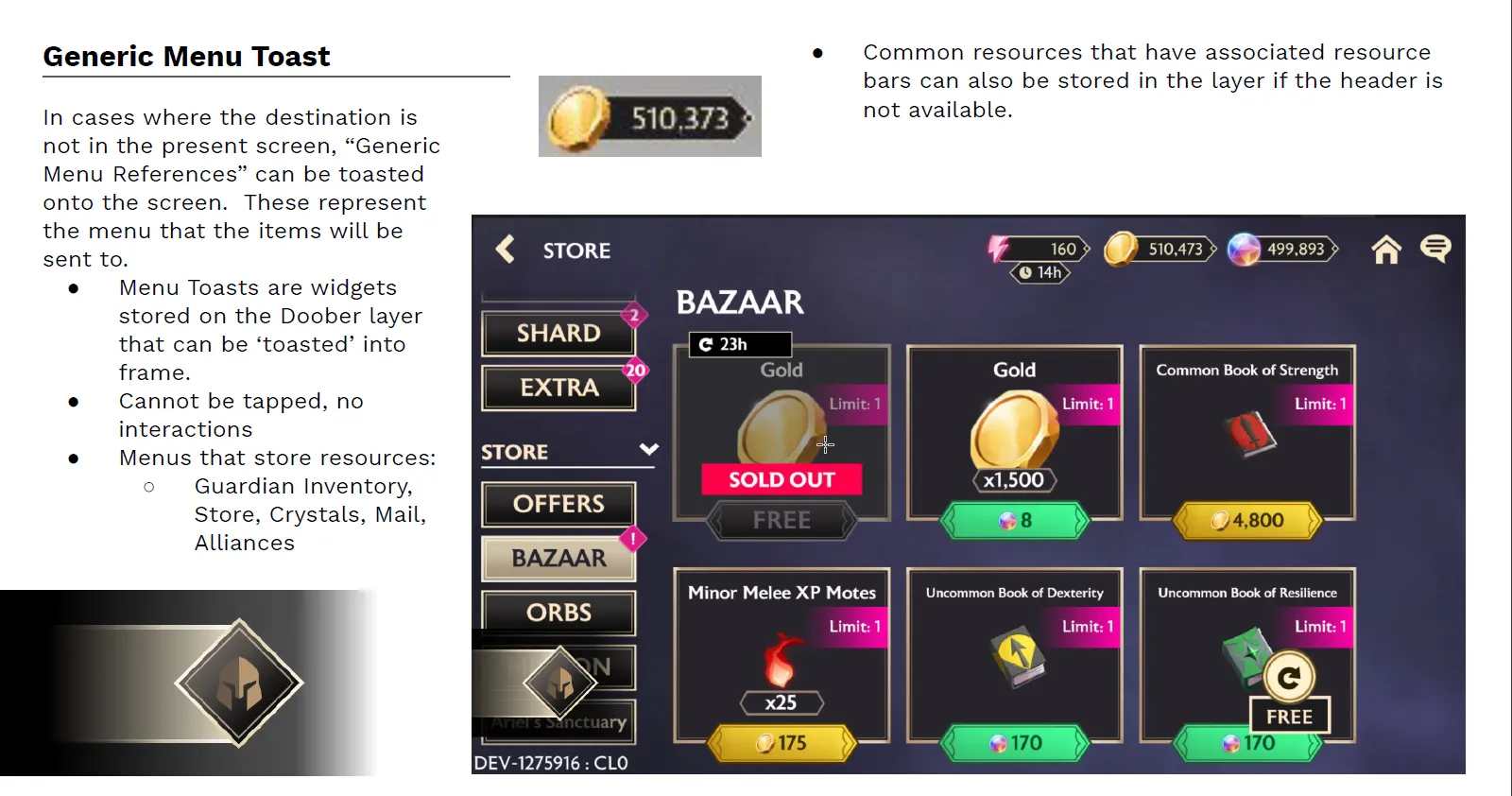
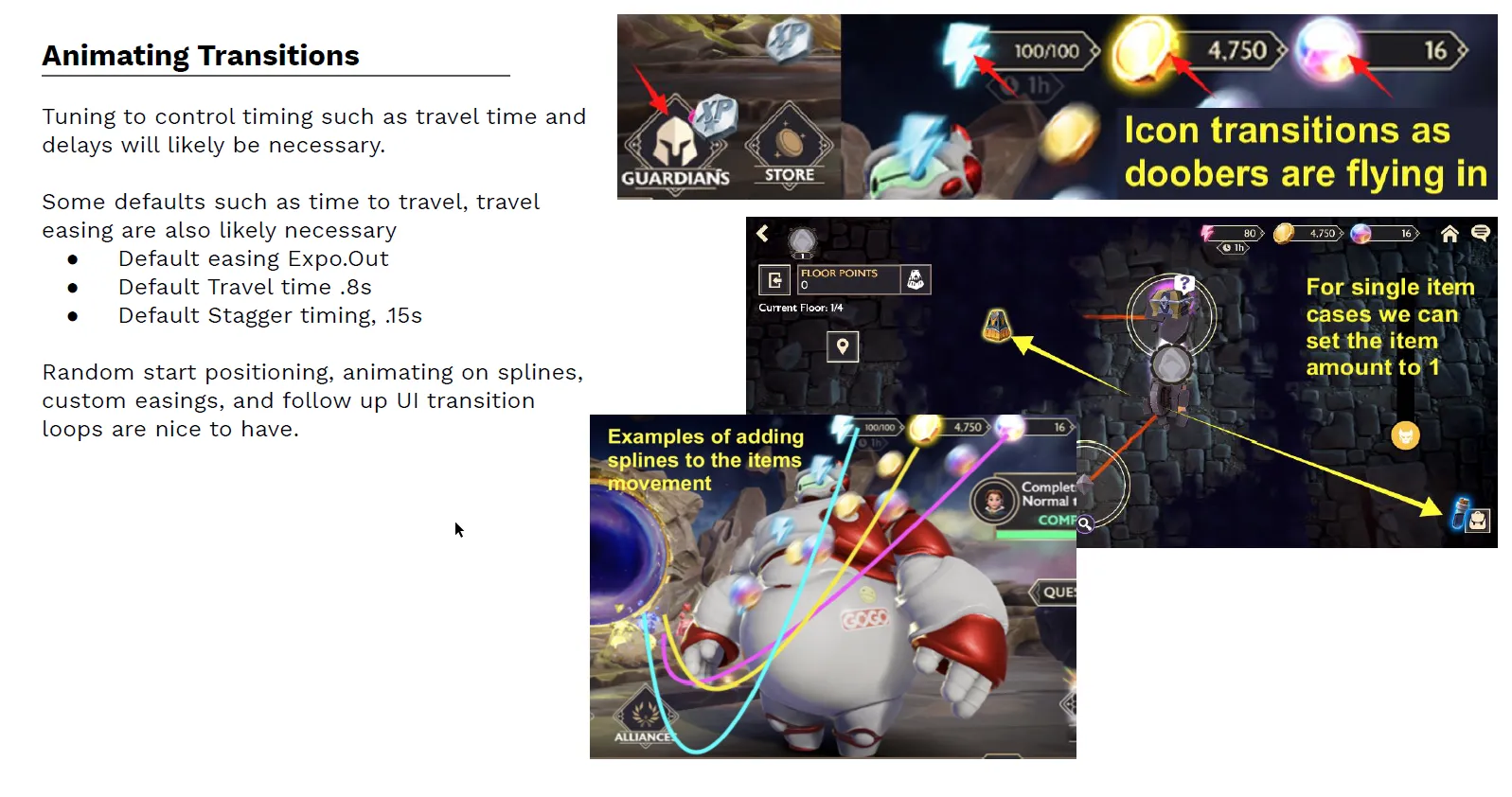
Throughout development I provided guidance and documentation for UX/UI systems based on the underlying technology. With game designers, front-end and back-end developers and feature stakeholders, we translated how features and systems would work from authoring tools, data structures and our game framework's capabilities. With engineering we prioritized or pivoted designs to fit the limits of the tech or the schedule, and occasionally developed new core technology: third-party chat, a social graph, and new UI particle and feedback systems.