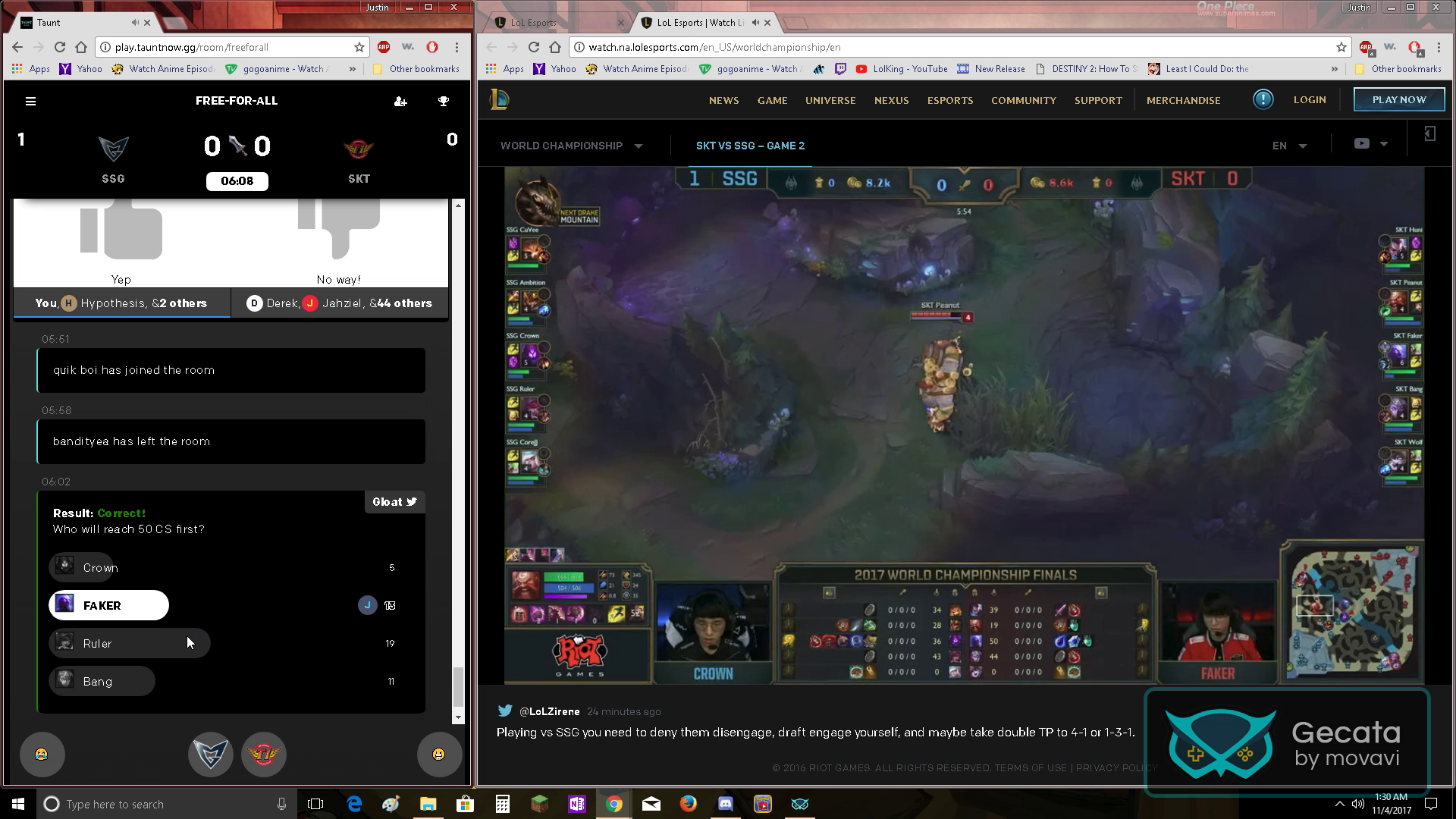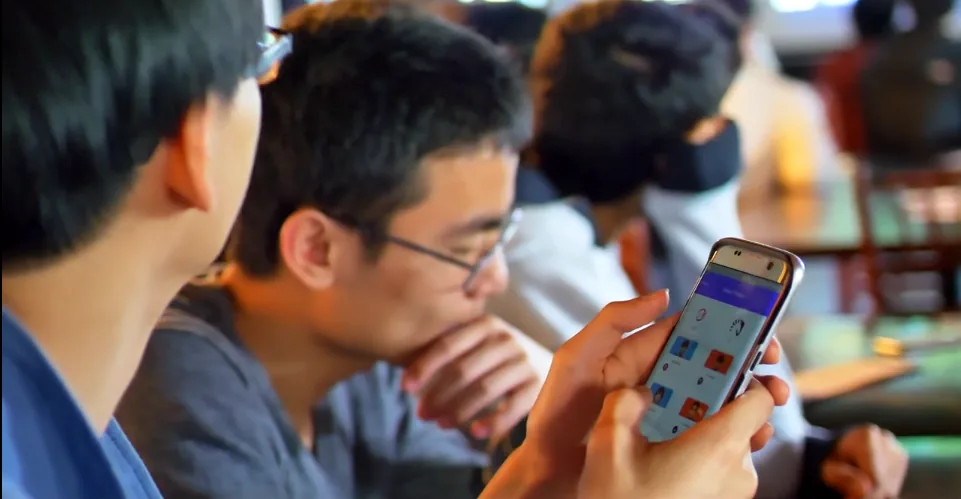
Concept to first live experience
2 months
Worlds 2017
Reach
played online and at 20+ college watch parties
Worlds 2017
The startup opportunity: machine learning and League of Legends esports
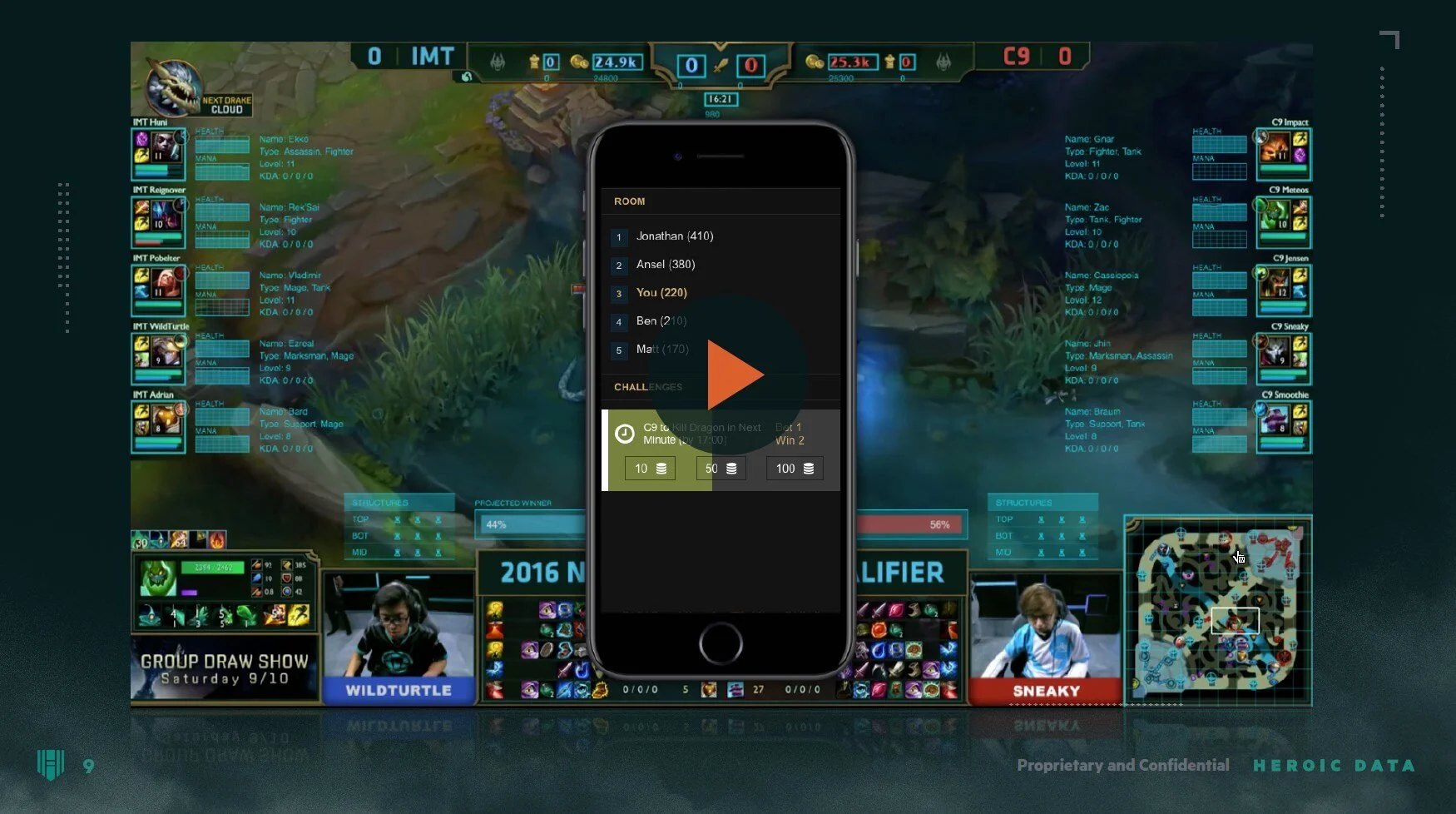
In 2017 I visited Pioneer Square Labs and one of its latest incubators, Heroic Data. I was shown a quick demonstration of computer vision and machine learning providing live data and analysis of ongoing League of Legends matches, and was amazed at the potential of the technology. After seeing a fun board game being built on it, I was hooked, and joined as the first employee of the newly renamed startup, Taunt.
My role
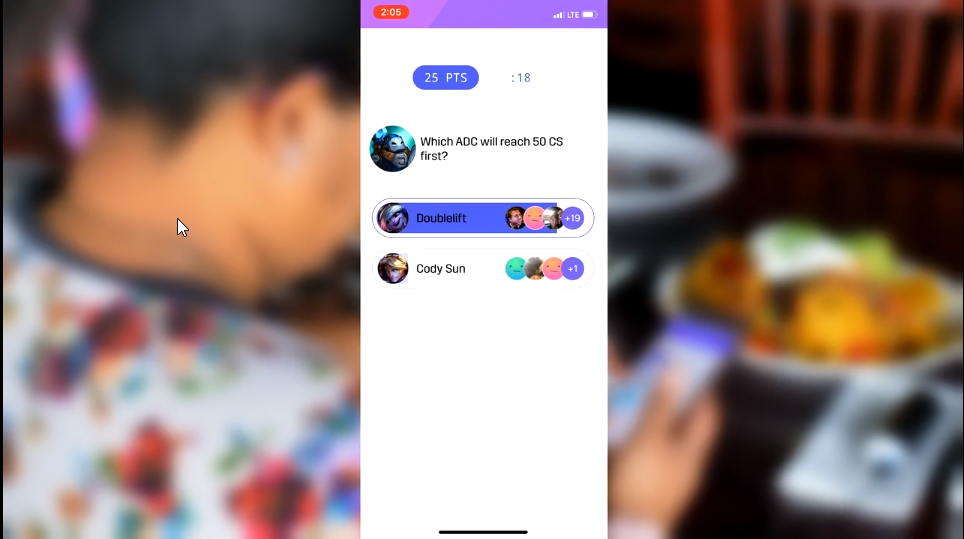
I joined Taunt as a Product Designer building a second-screen experience for watching live esports. Our small team prototyped and launched our first experience within two months for League of Legends Worlds 2017: a live companion app that let audiences take part in live quiz challenges.
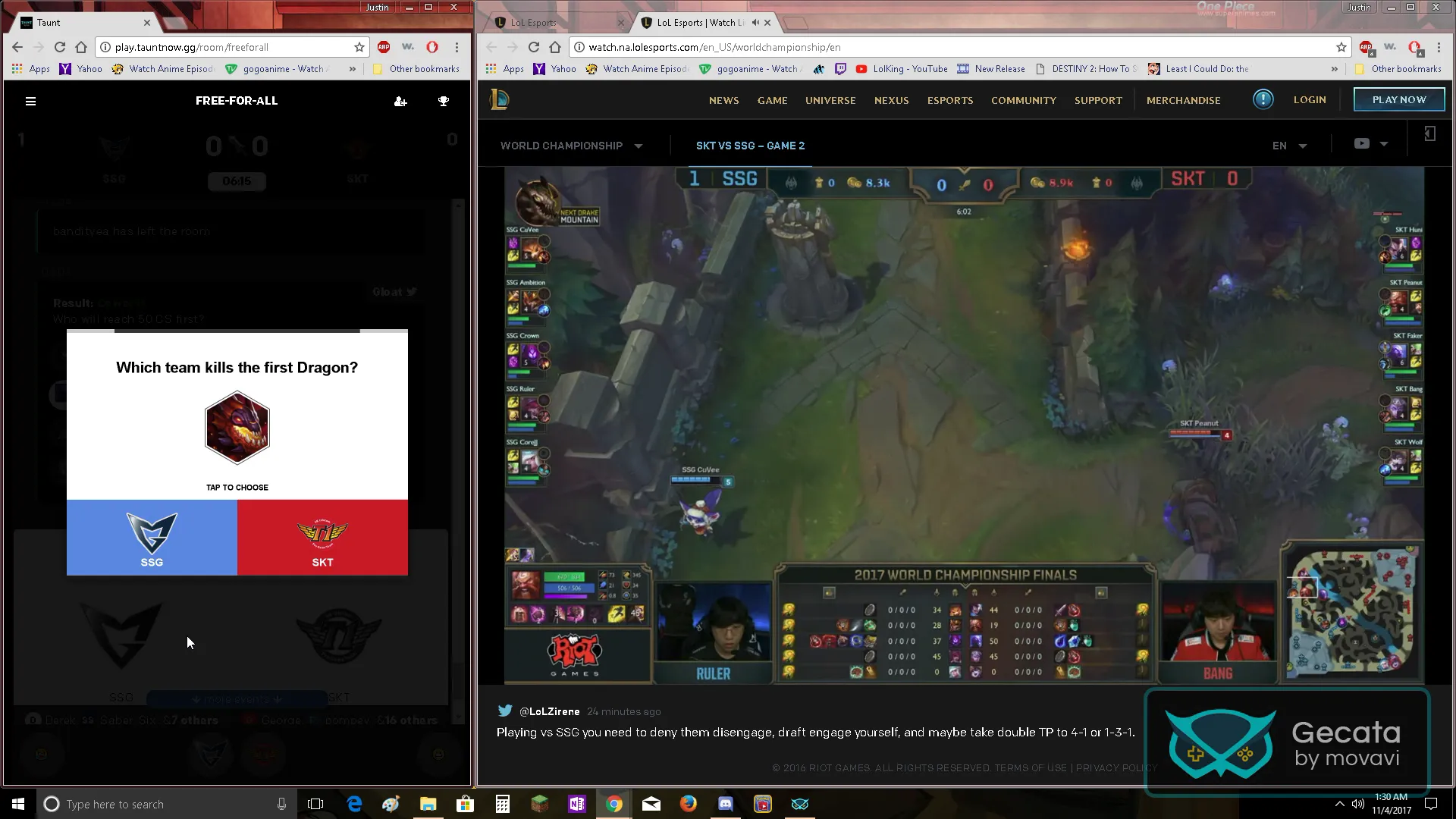
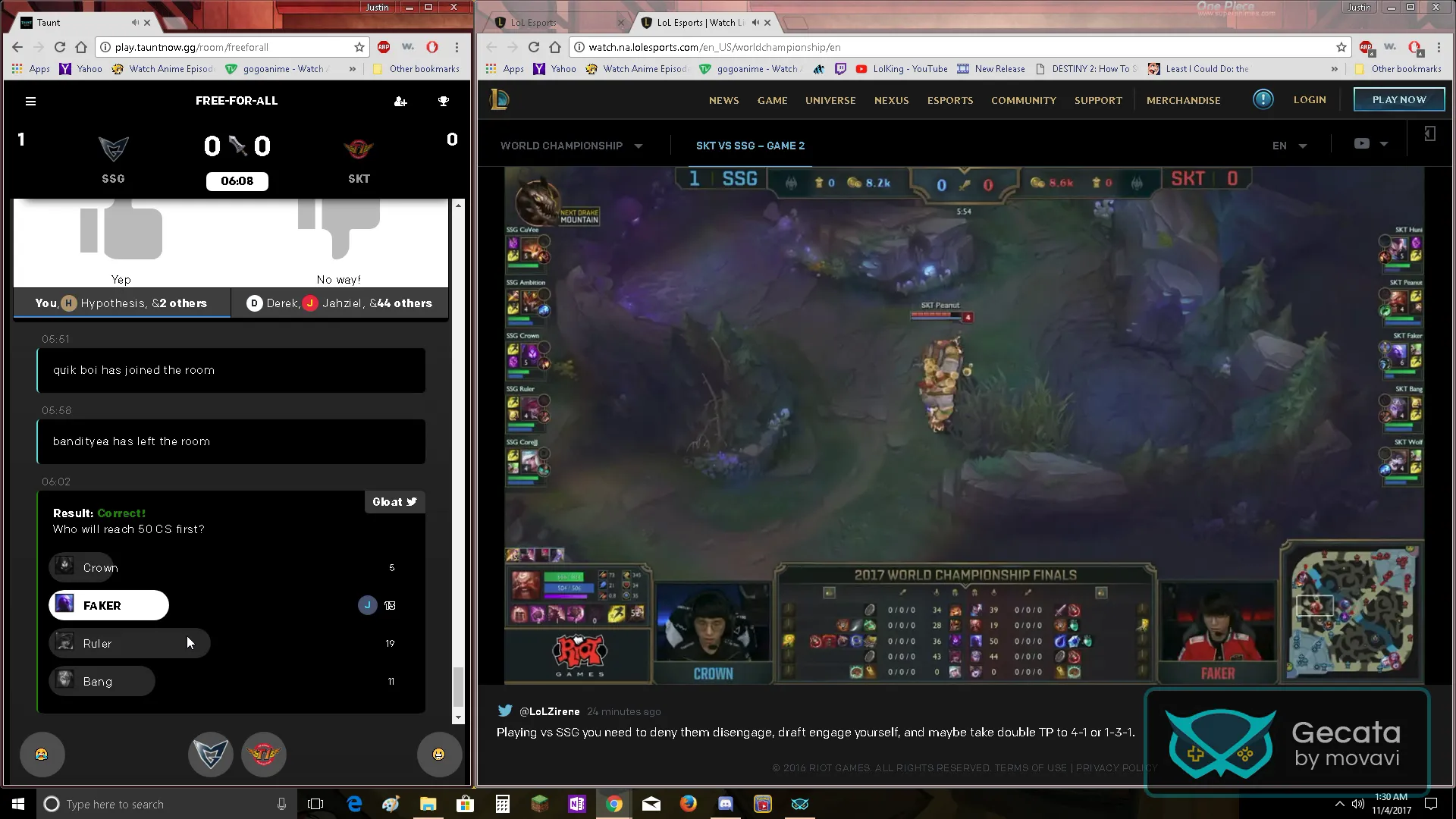
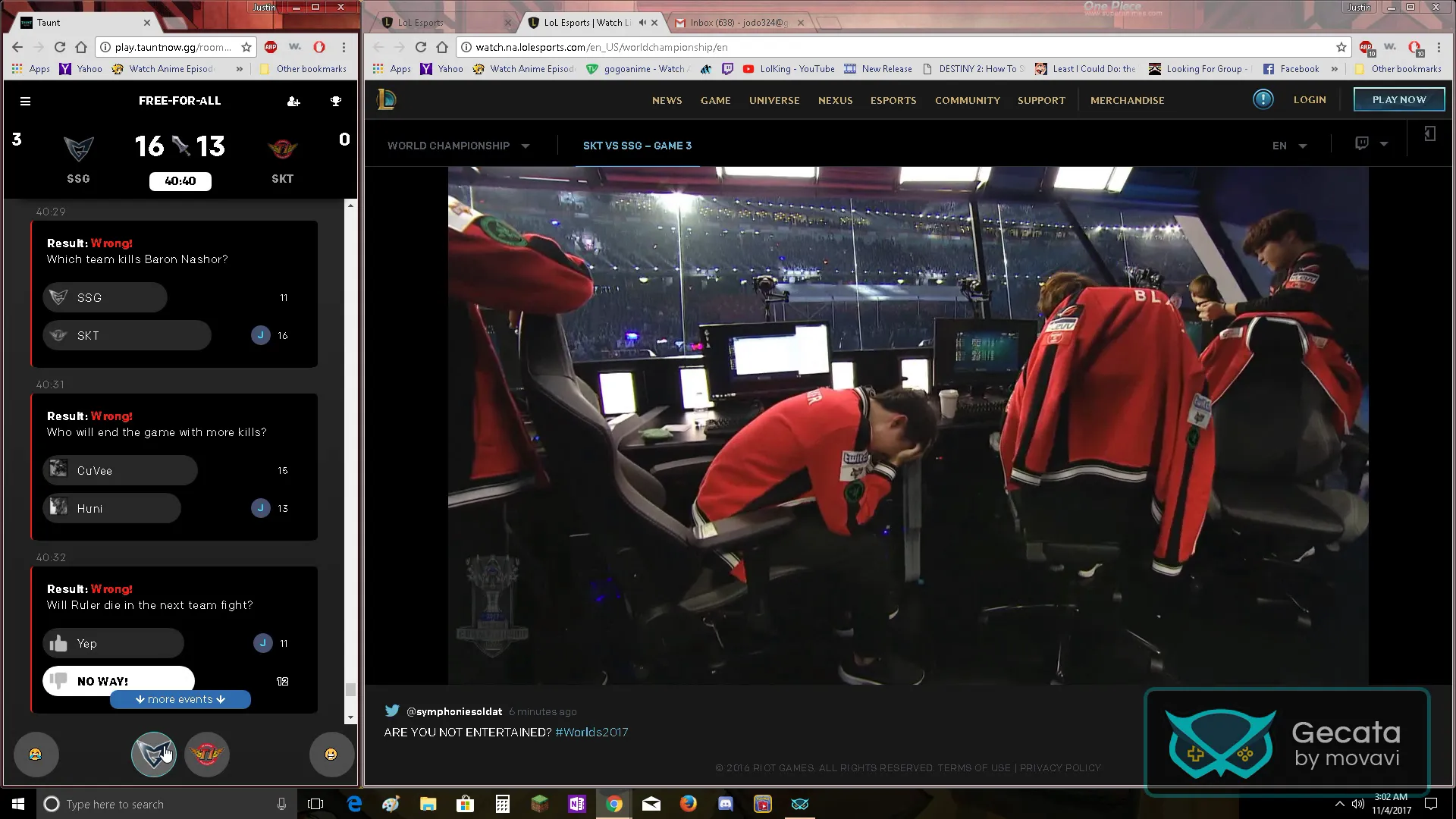
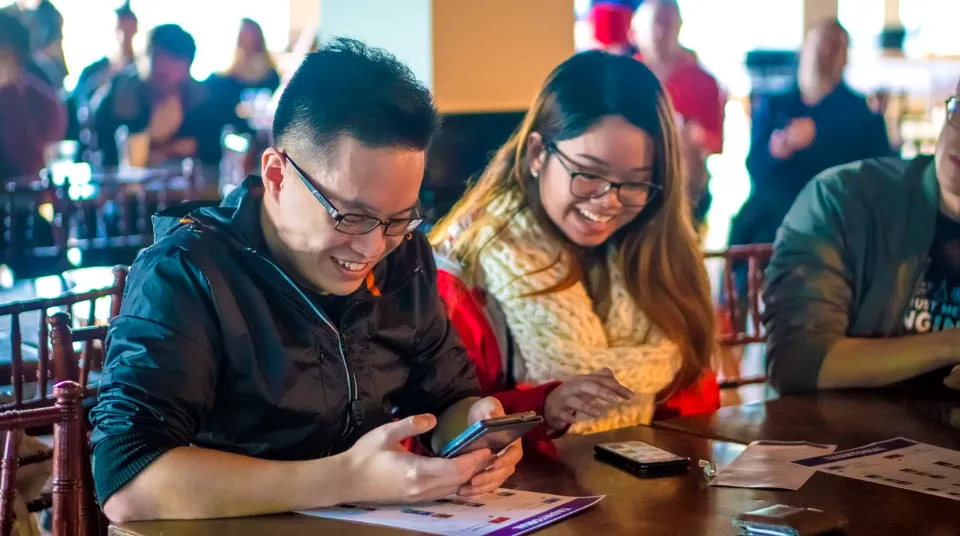
Worlds 2017 Taunt prototype. Played online and at over 20 college watch parties.
As the startup grew I wore many hats. A few of my responsibilities and contributions in our first year:
- Design workshops and presentations
- Market expertise and user advocacy
- Building a live service team, producing the live experience, and maintaining live services
- Managing interns and events
- Coordinating Taunt across a network of live and college events
- Lean UX advocacy
- Product design and game UX: an experience familiar to gamers and native to a mobile app
- Gamification: game design using the "Hooked" model, gamification, and light CCG mechanics
- User research: set up UR testing and resources through PlaytestCloud, and partnered with a user research intern on player feedback
After the initial release
After our initial release, people who engaged with the app responded well, but we ran into the many challenges of being a second-screen experience. Through player testimony, usability research through PlaytestCloud, and user research by Eric Chang, we found four big challenges facing the product:
"Secondary screen experiences can become distracting and compete for the user's attention."
- Product polish. The initial web app prototype was rough, and was not recognizable as a quality product.
- A distracting second screen. A secondary app vying for your attention while you watch can be distracting.
- Running a live service. The premise relied on being a live service, which was hard when most games were played in Asia until 2am. "Putting on a show" and running a production was a completely new skill set for the team.
- User acquisition and adoption. How we would find and attract users was a consistent challenge. Acquisition and scaling were still problems to solve.
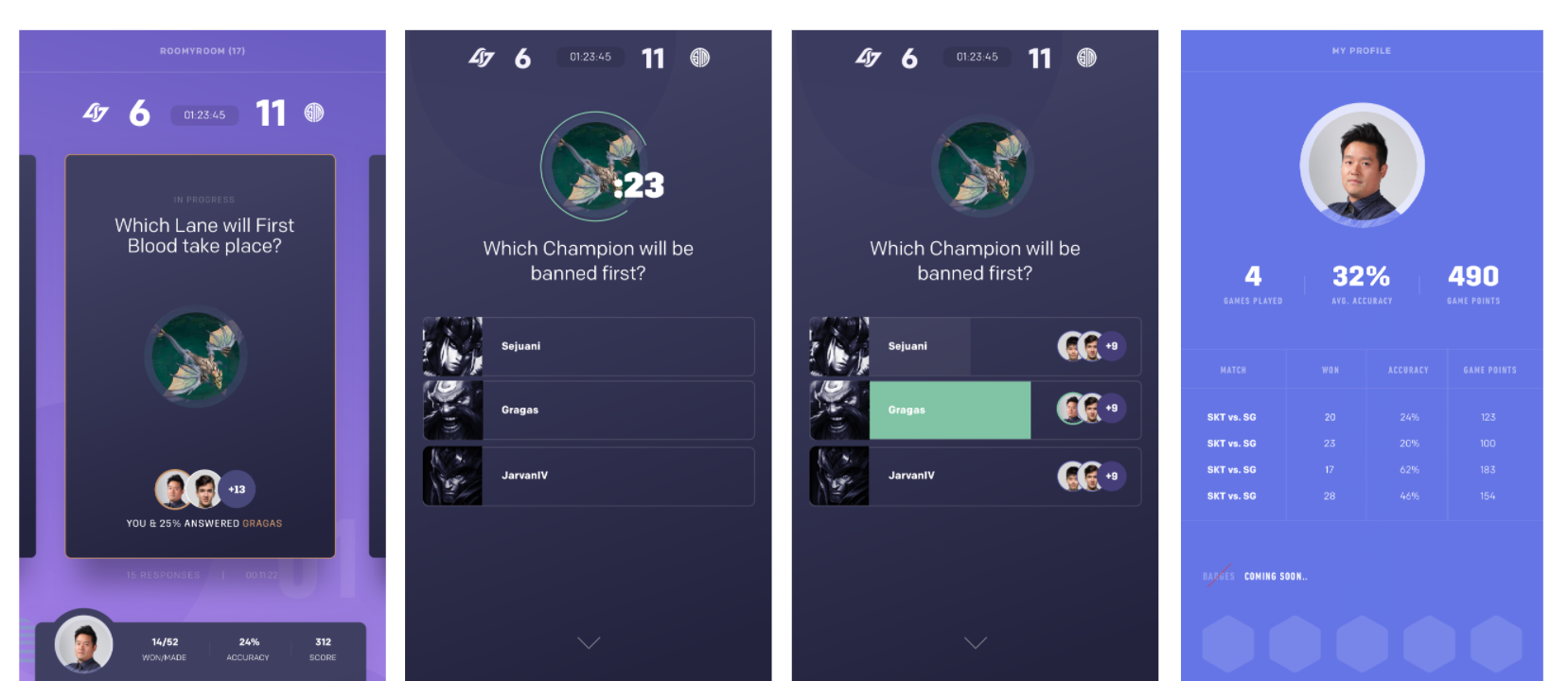
Take 2 with trivia
Throughout development, the wildly popular HQ Trivia was a major influence, and we made a second attempt at a live audience engagement experience. It suited the product's actual state: during rapid testing we had not yet hooked up the computer vision, and mostly ran with hosts providing their own spicy hot takes.
With another incredible Product Designer, Kori Handy, we evolved the product with a complete rebrand. We all contributed to the esports and product experience; the rebrand gave us a clean, friendly new look that set us apart from other esports apps.
As the company grew and hired new leadership and product management, my role shifted to the core game systems and live experience, as we implemented new interaction layers that let viewers play along with boosts and power-ups, and ways to flaunt correct predictions. Watching the audience in Twitch chat, we made a big hypothesis that players would want more ways to express and represent themselves, and gamified the experience with account decoration and custom emotes.
The next push produced another fun live experience, but as the novelty wore off we were still missing a product that brought players back. A decisive call had to be made between a live and an online experience, and we decided to move Taunt to streaming platforms.
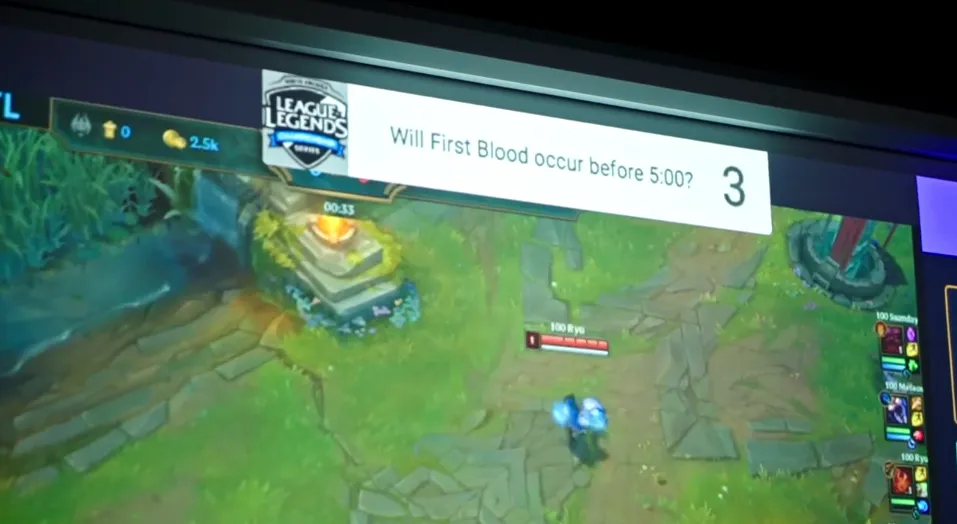
Testing new modes, and a relaunch
For the next iteration, we knew we had to go to the audience where they watched, and partnered with streamers and their audiences. We experimented heavily with new game formats and interaction models, and began reinvesting in CV automation.
I facilitated and ran design sprints and prototypes, and worked with the team to ship the next iteration of Taunt for experimentation.