Build time
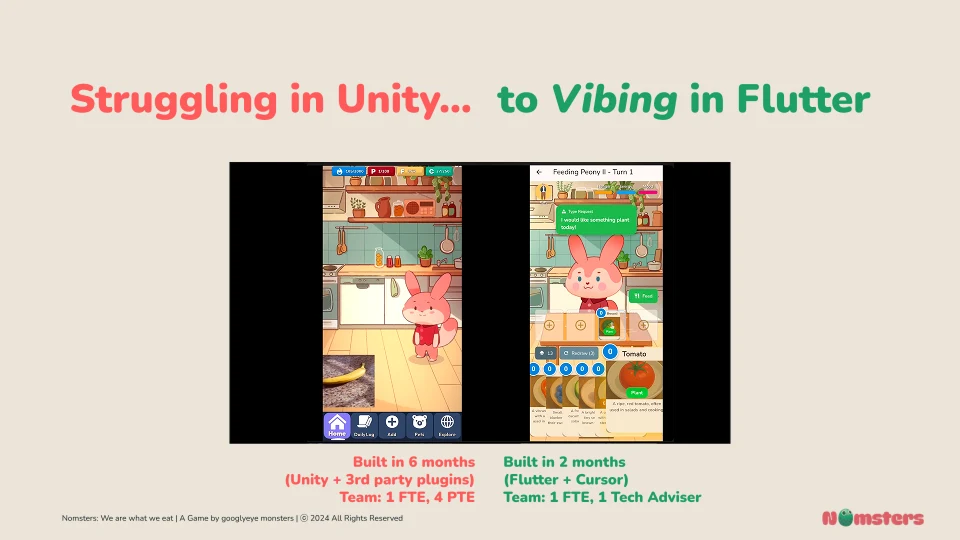
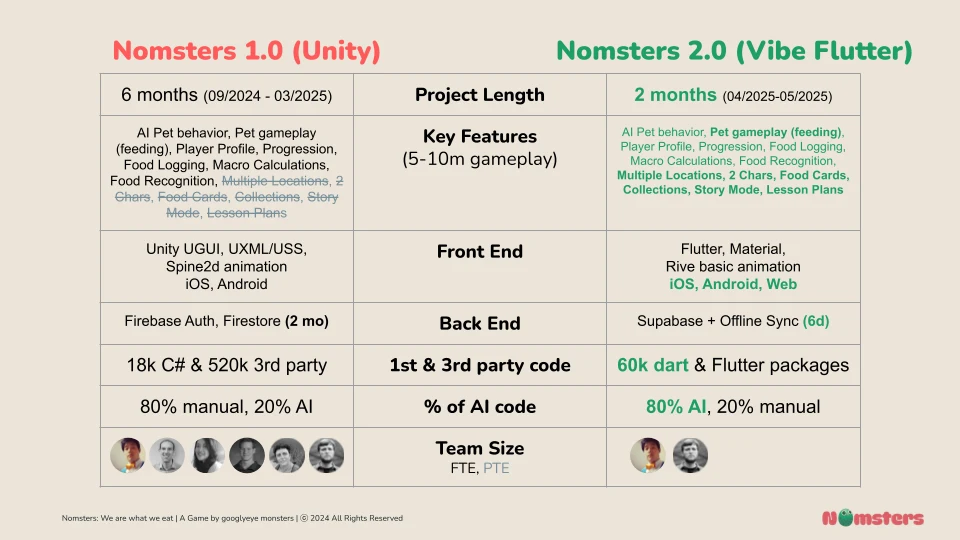
6 months → 2 months
Unity, 1 FTE + 4 PTE → Flutter + Cursor, 1 FTE + 1 adviser
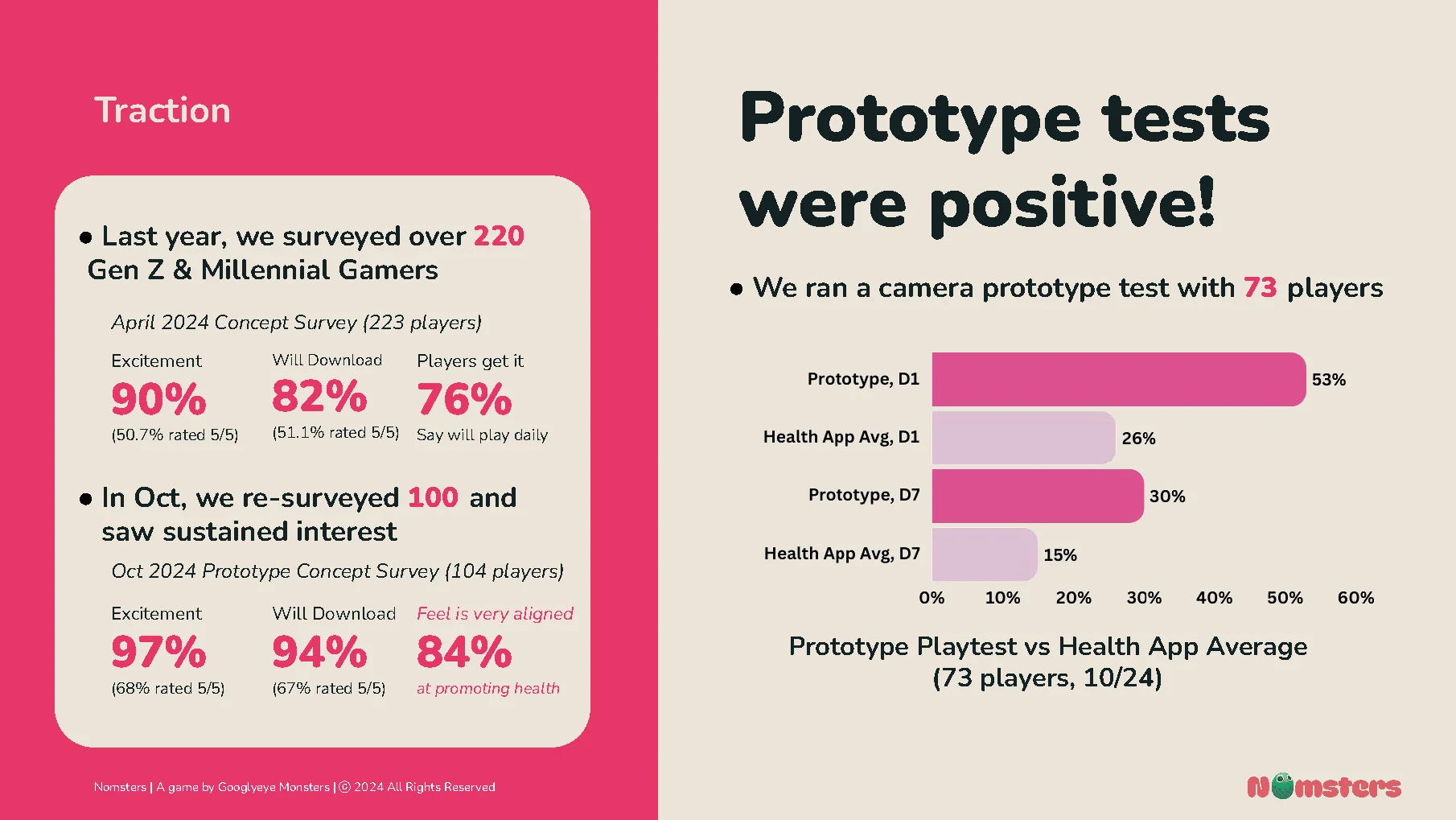
Retention, D1 / D7
53% / 30%, vs a 26% / 15% health-app average
73-player camera prototype test, Oct 2024
AI-written code
20% → 80%
Nomsters 1.0 (Unity) vs 2.0 (Flutter)
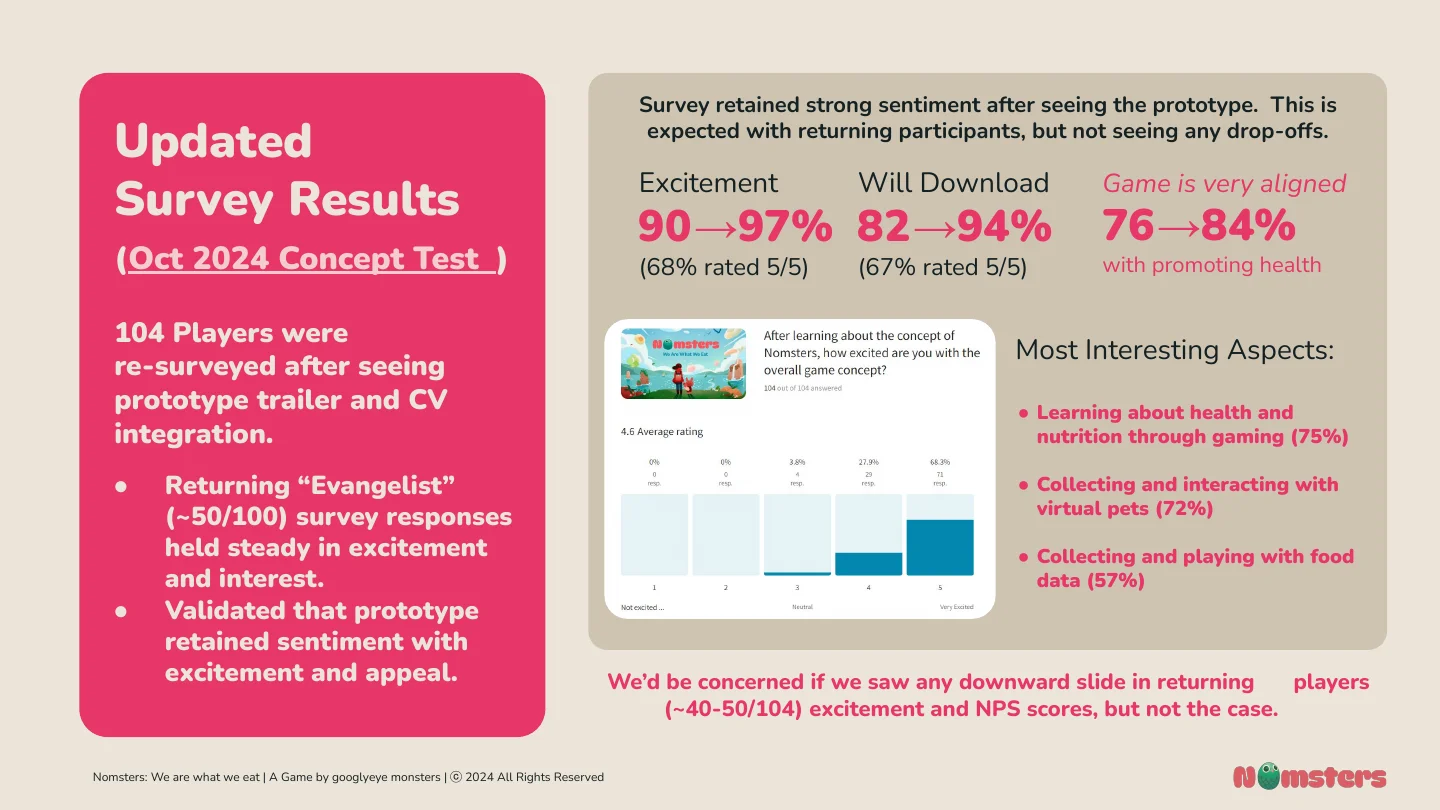
Concept survey
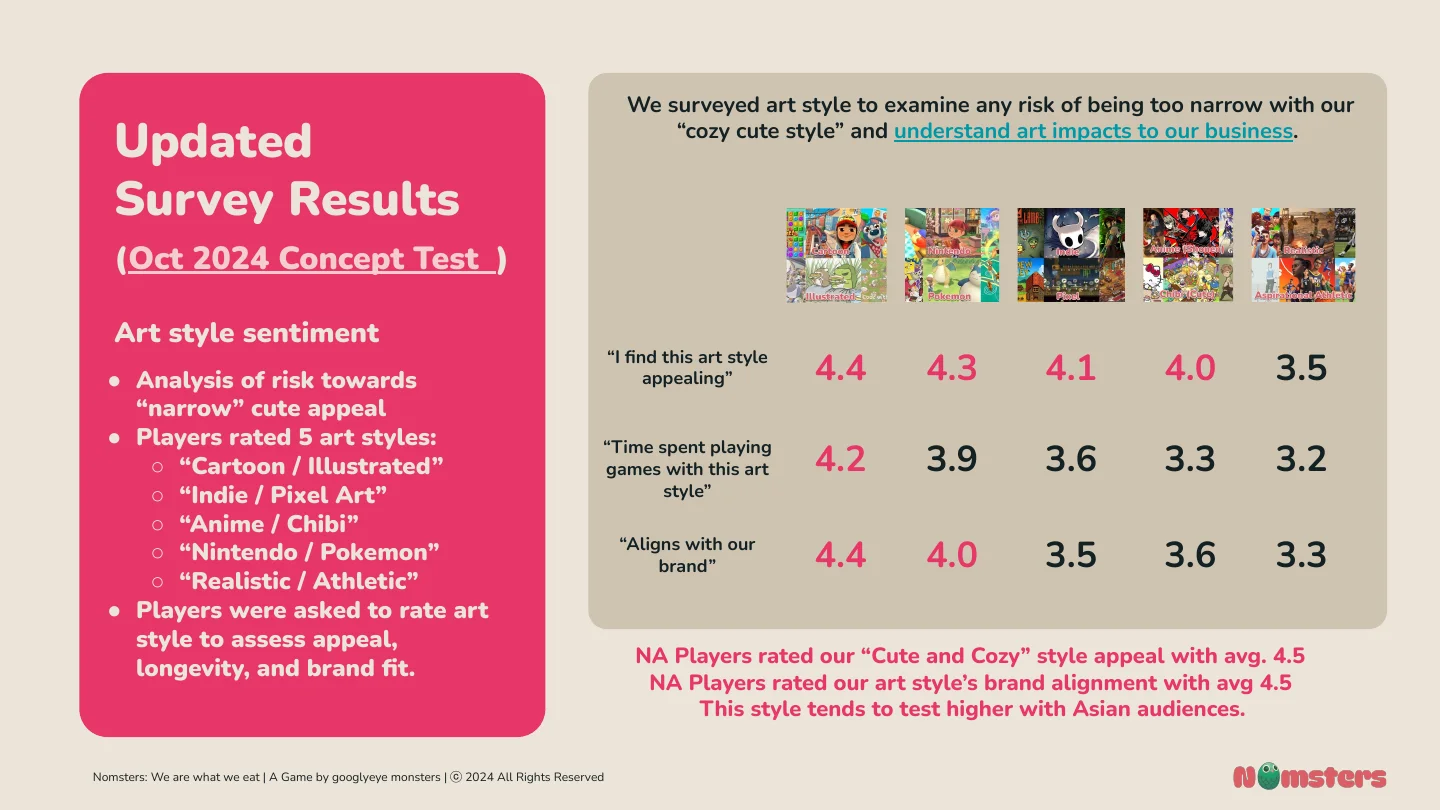
90% excited, 82% would download
223 Gen Z and Millennial gamers, Apr 2024
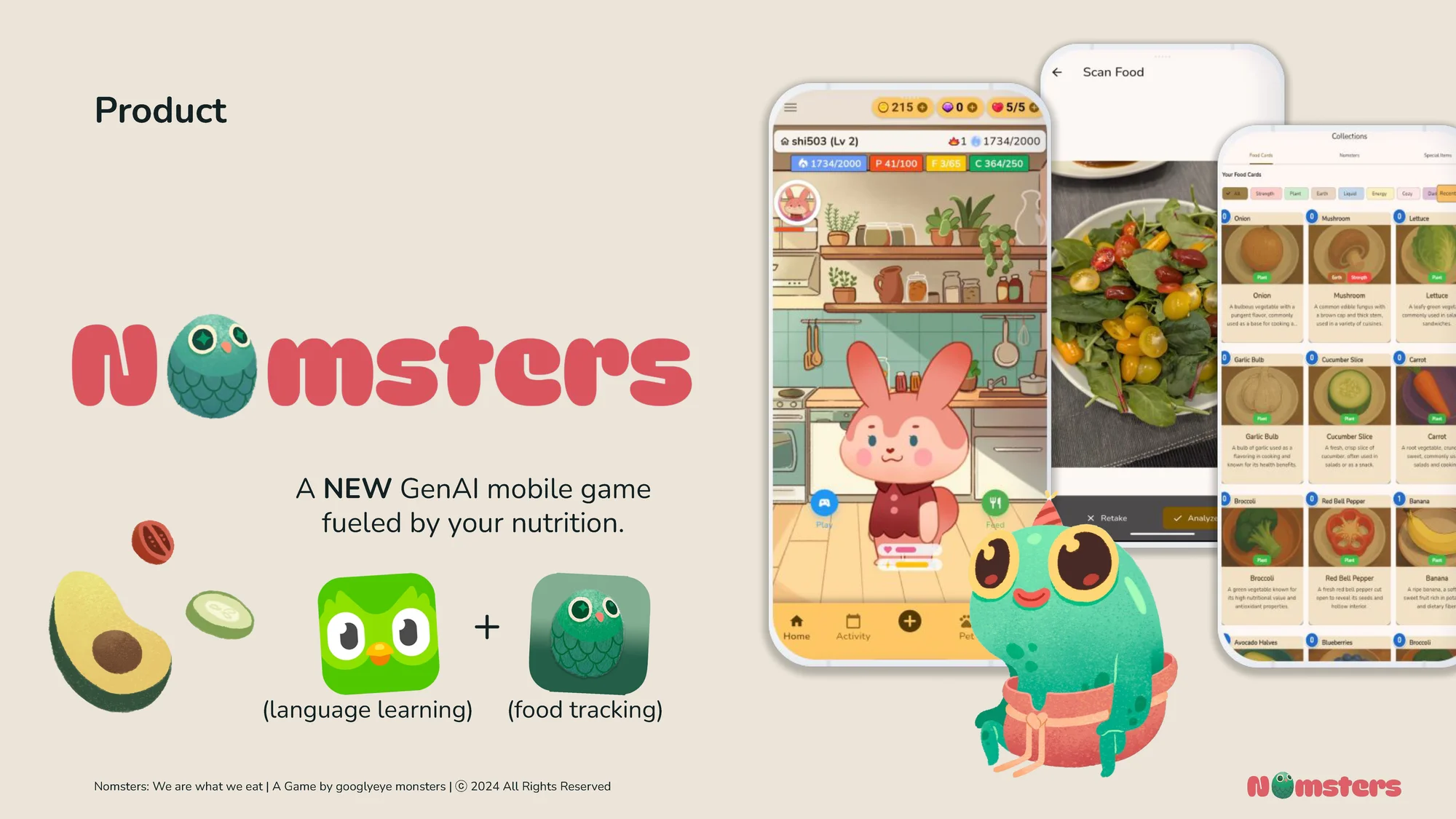
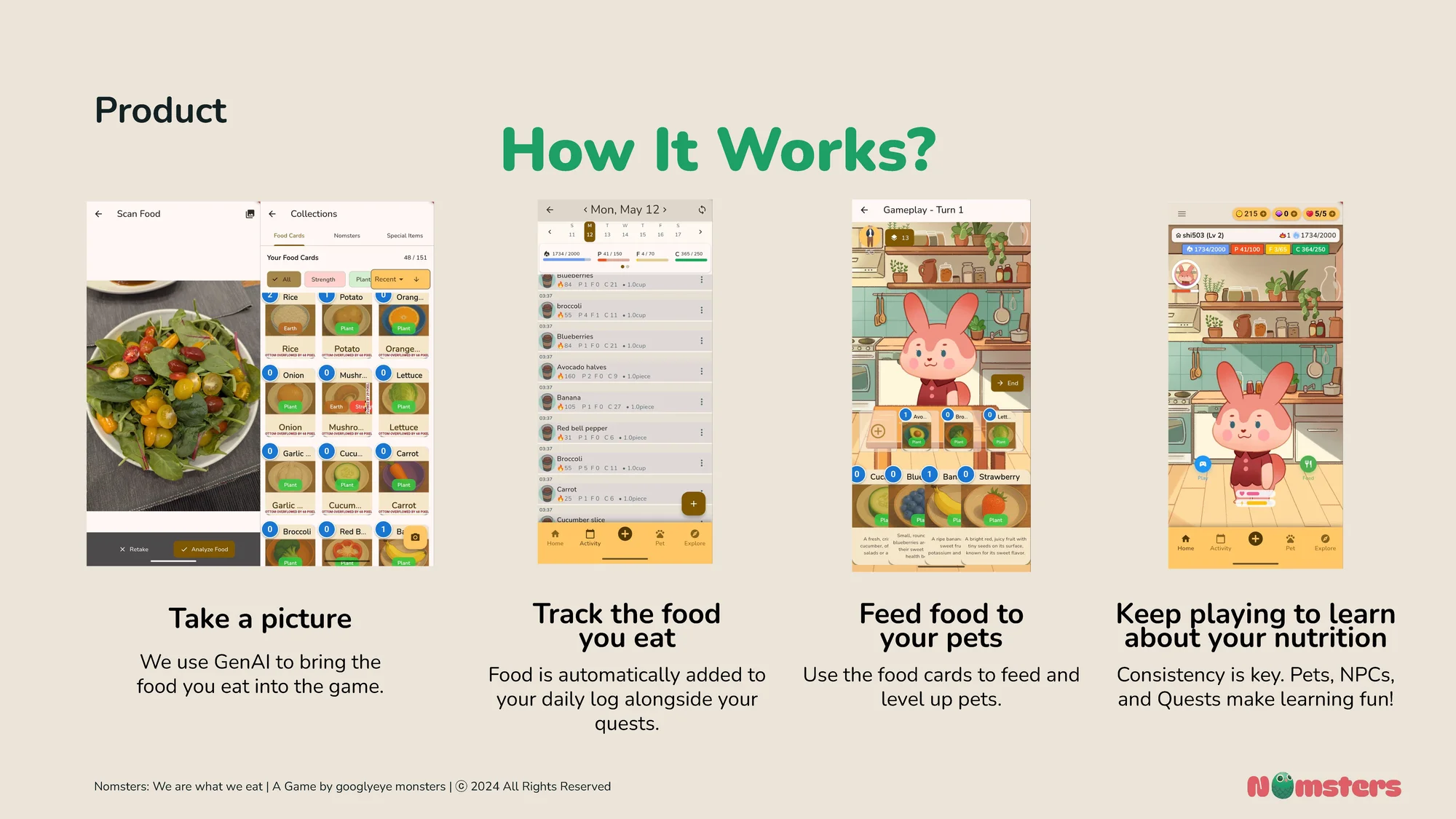
After losing 30 pounds in 2023 with MyFitnessPal and MacroFactor, I wanted to turn the tedium of a caloric deficit into a hero's journey. Nomsters is a nutrition-based mobile game: snap a picture, and the meal becomes a food card you use to feed your pet, play minigames and complete quests.
The pitch
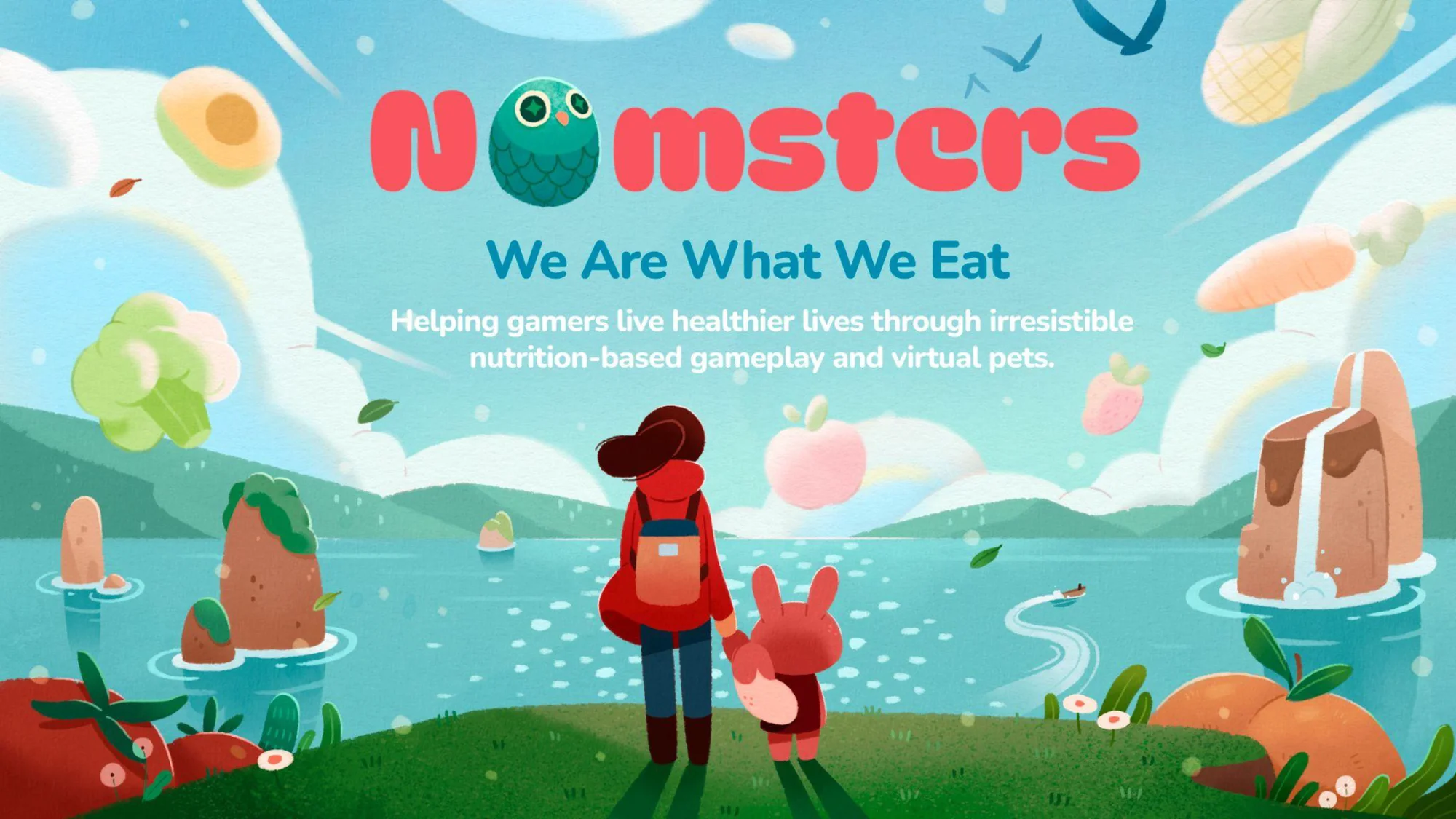
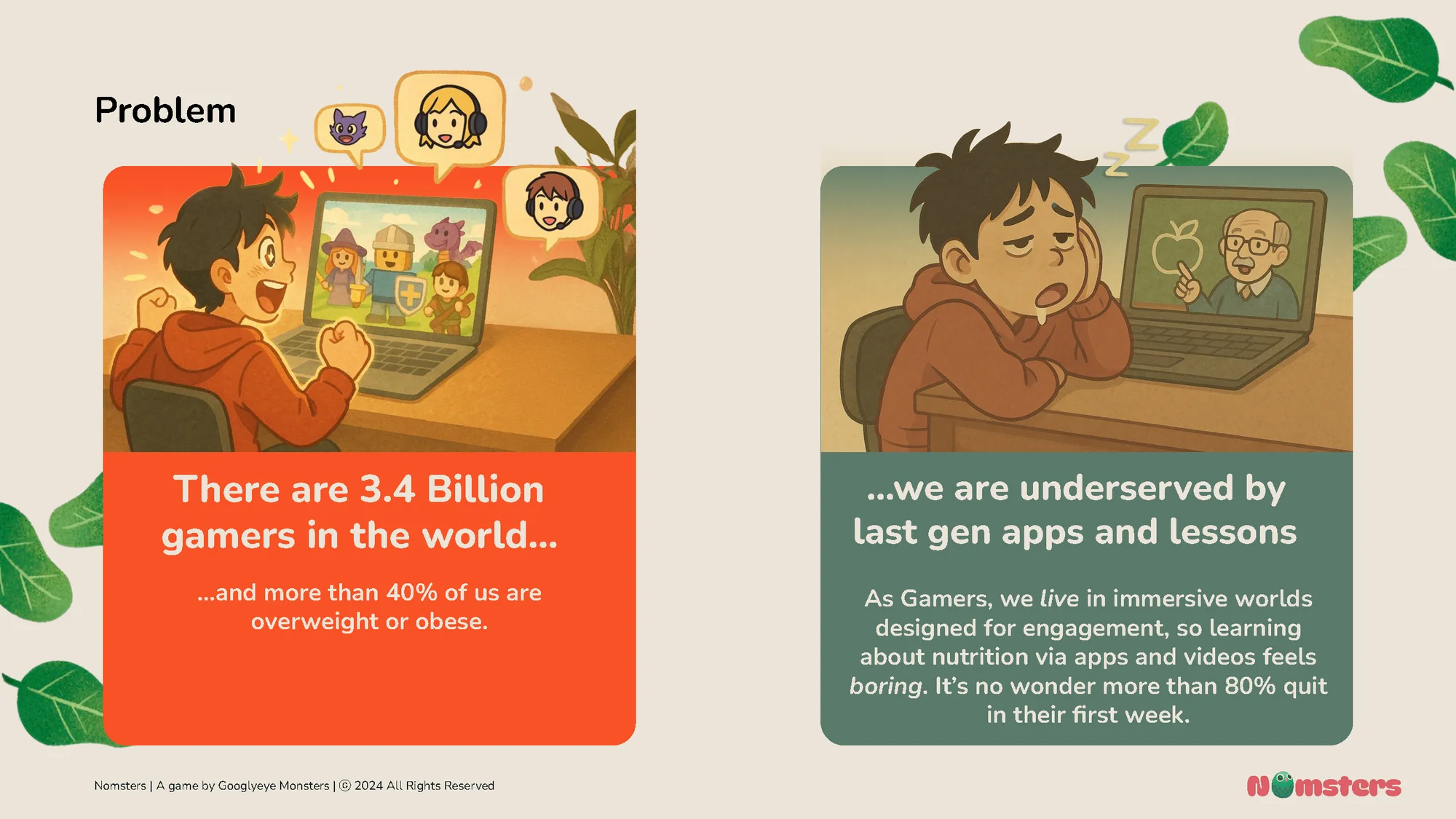
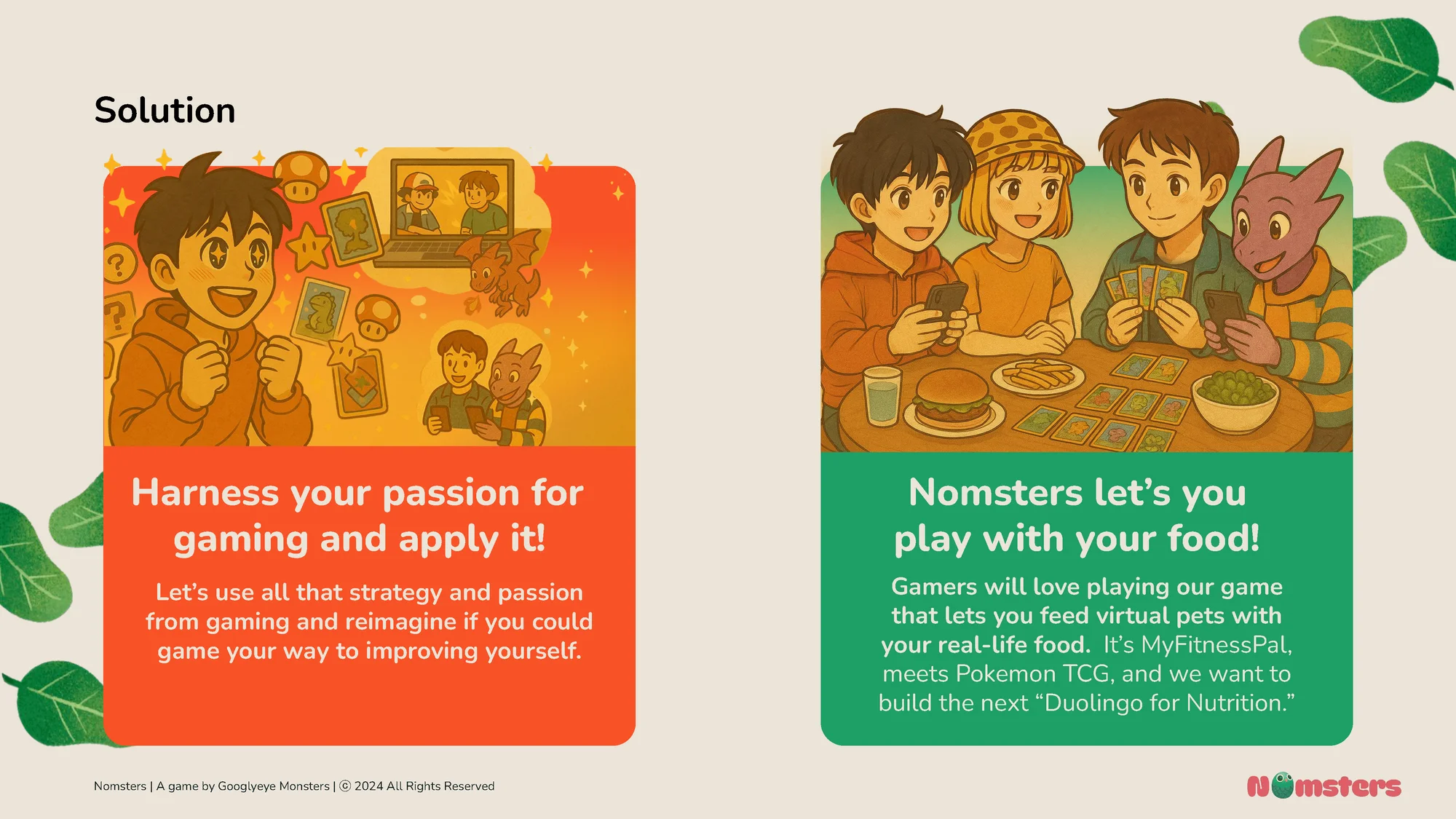
As gamers we live in worlds designed for engagement, so nutrition apps feel like homework, and most people quit them in their first week. Nomsters meets gamers where they already are: part Pokémon and Tamagotchi, part MyFitnessPal.
Player Feedback
Before building the full game, I put the concept and then a rough prototype in front of real players through PlaytestCloud, in three rounds:
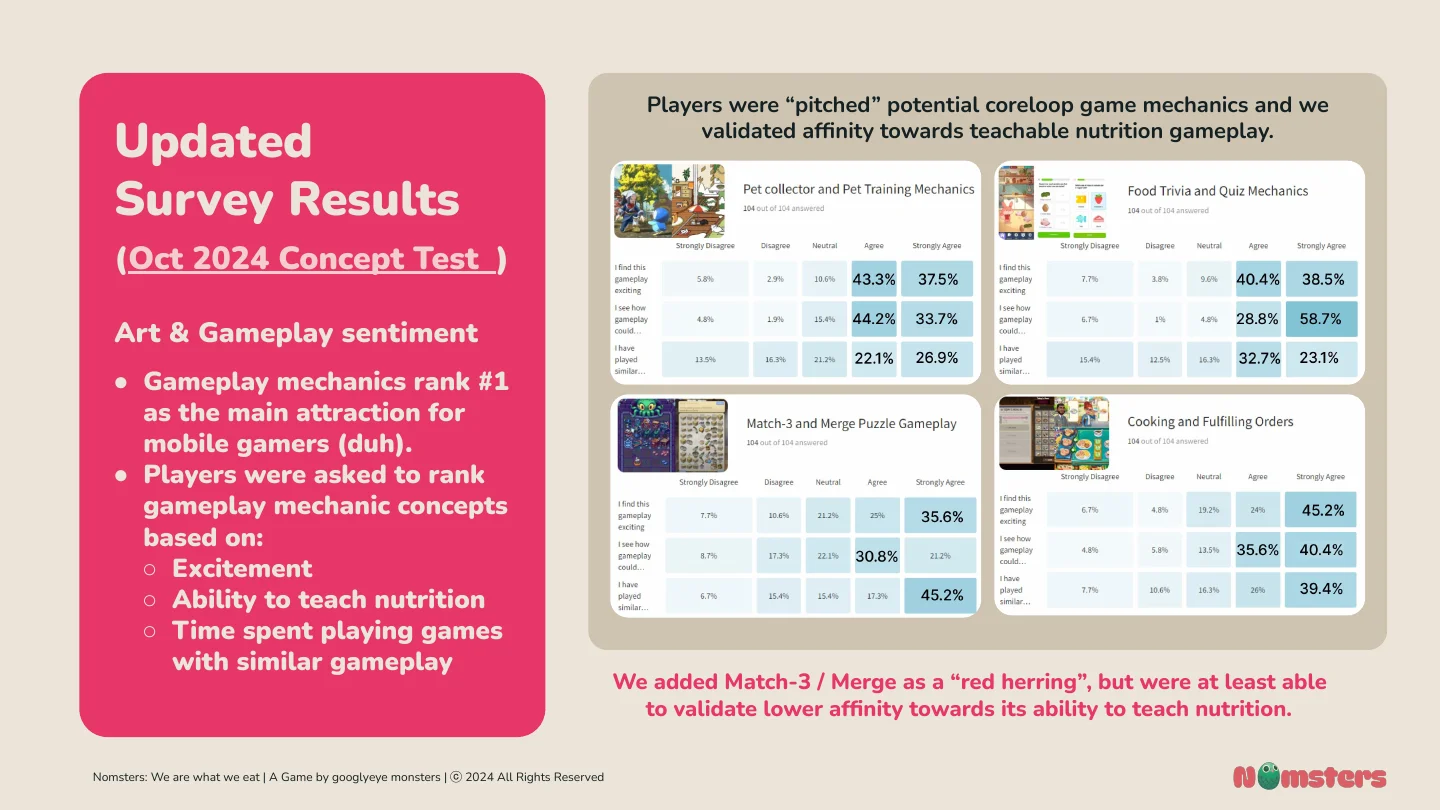
- Apr 2024 · Concept survey, 223 Gen Z and Millennial gamers. 90% excited, 82% would download, 76% said they would play daily.
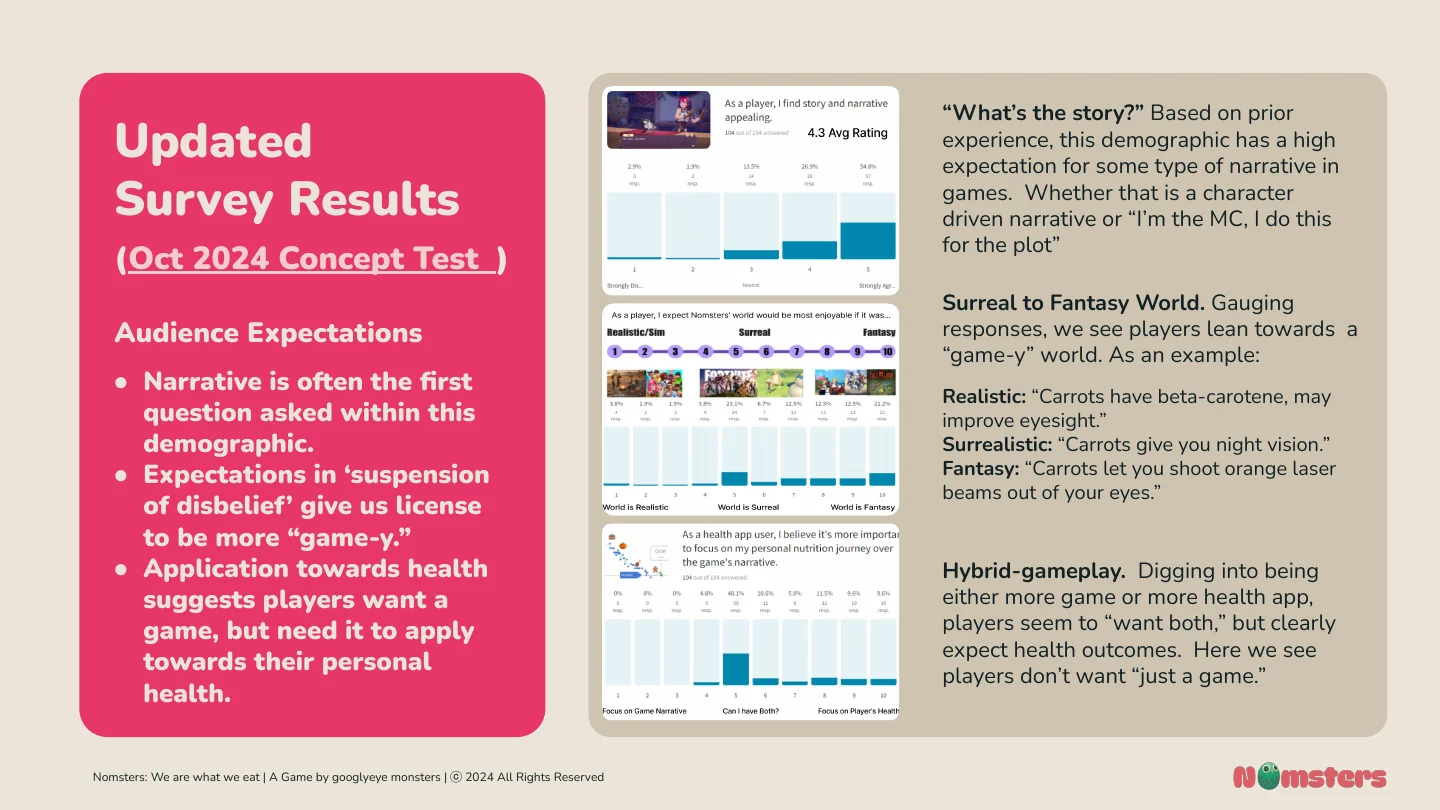
- Oct 2024 · Re-survey, 104 players, after they saw the prototype trailer and the camera. Interest held and rose: excitement 97%, download 94%, and 84% saw the game as very aligned with promoting health.
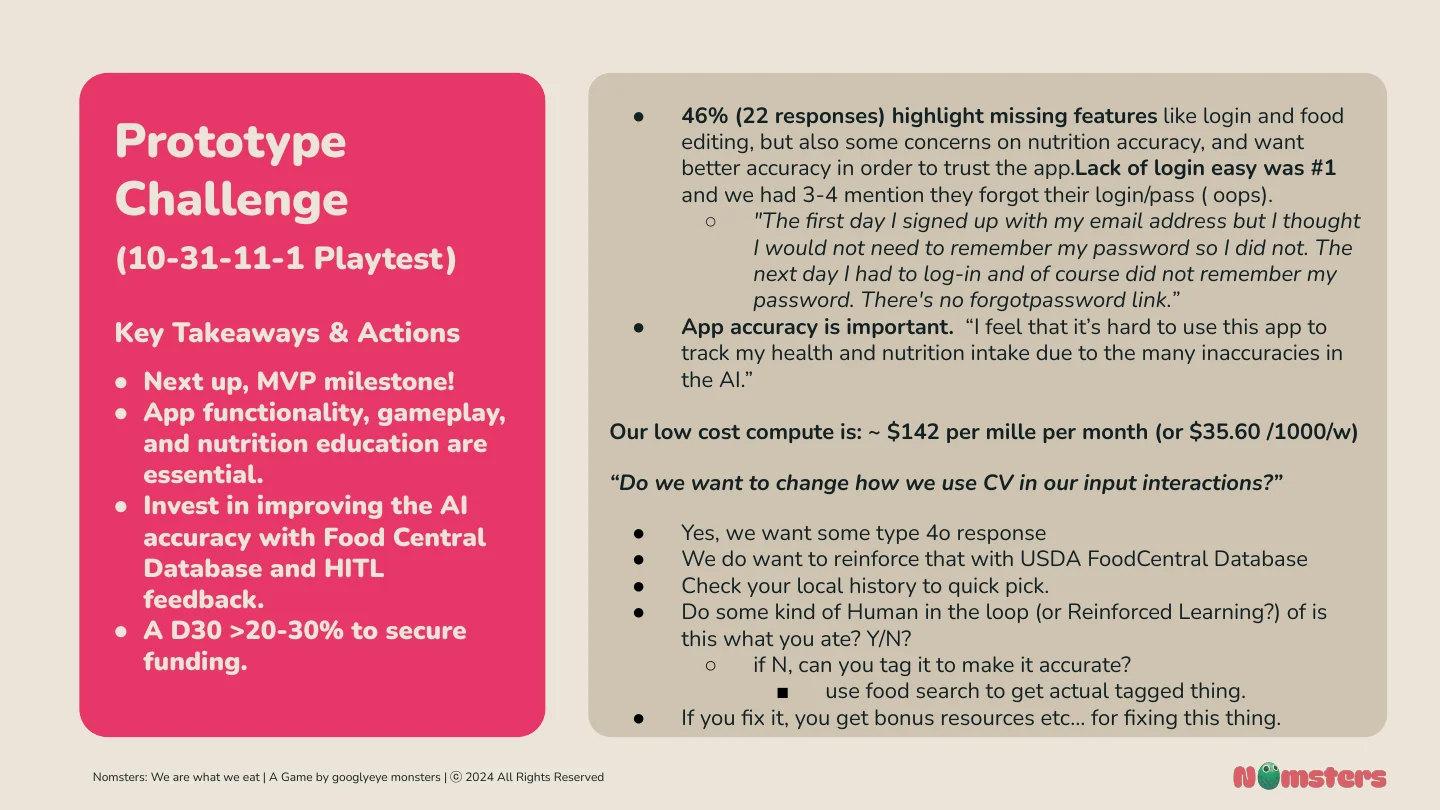
- Oct 24–31, 2024 · 7-day camera prototype playtest, 73 players on Android. D1 53% and D7 30% in the first cohort, 38% and 20% averaged across all start days. Players only had to play five minutes to be paid; 83% played past the first day.

"The camera function was awesome. It was able to figure out it was coffee with milk and a ham and cheese sandwich." — playtester, Oct 2024
A meal becomes a game object
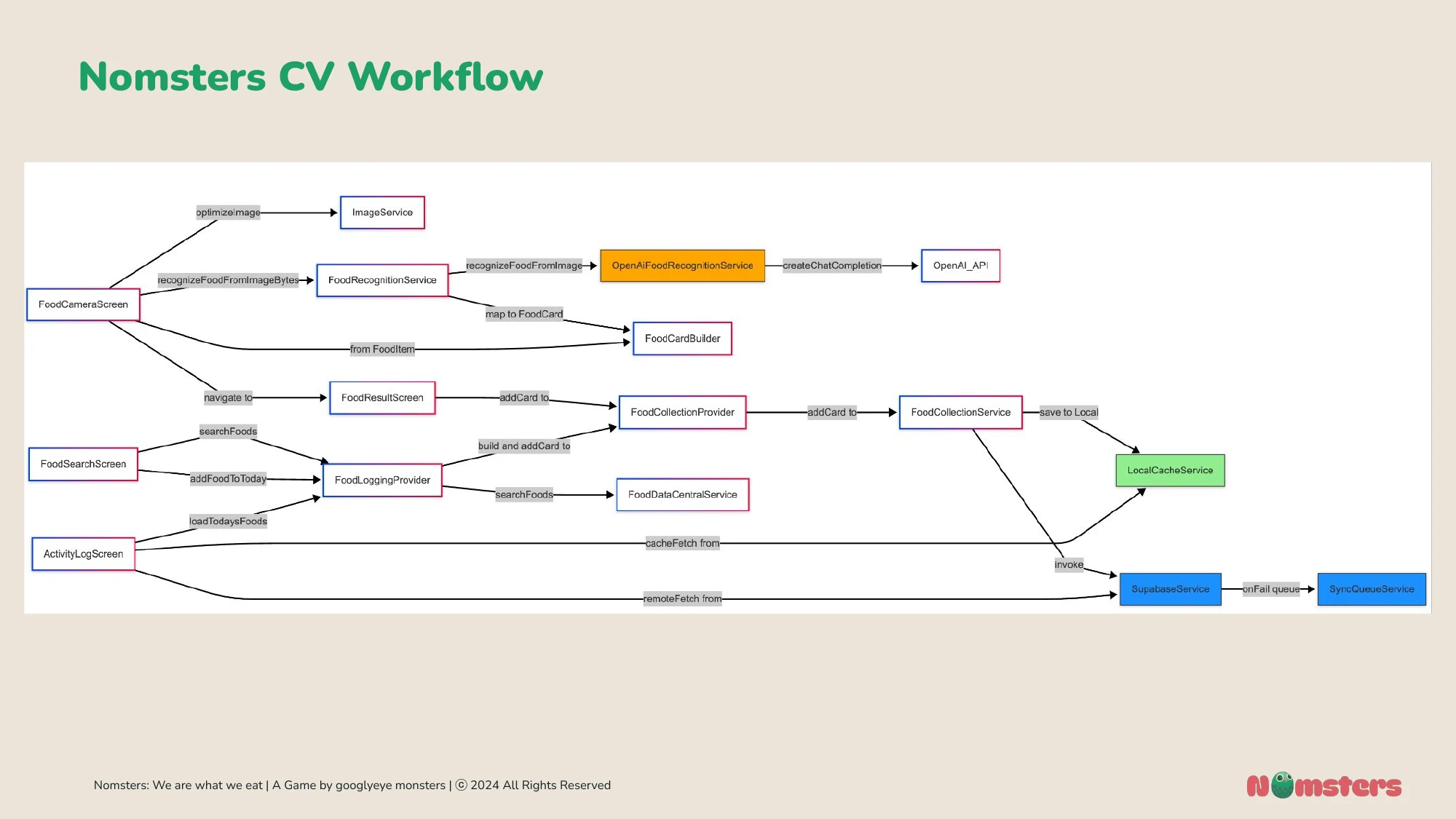
A photo of a plate is recognised, mapped to a typed food card, added to your collection and synced. CV results were parsed into JSON, estimates grounded and revalidated against USDA Food Central (and other APIs), and would be processed into our game's food card system.
Goal was to get players to think of their diet as a TCG deck: each card has a mana cost, one mana is 100 calories, and a deck under 20 mana loses weight.
From struggling in Unity to vibing in Flutter
The Unity prototype took 6 months with a team of 5. After the solo pivot to full-AI, I rebuilt it in Flutter in just 8 weeks, with more of the game in it (story mode, collections, lesson plans, a second character) and web alongside iOS and Android. The code went from 18k lines of C# to 60k lines of Dart, and from 20% AI-written to 80%.